I think by now, most of us are familiar with the epic screamfest
Valley of the Dolls (1967), the gloriously garish film presentation of Jacqueline Susann's runaway best-seller of the same name. Brimming over with late-'60s clothing, hairstyles and makeup and filled with quotable dialogue, it's the pinnacle of tasteful tastelessness, coming as it did just when the standards for what could be said and shown on-screen were loosening considerably, yet studio pictures (such as this one's 20th Century Fox) still sought a degree of restraint in their product. During one particularly howling moment,
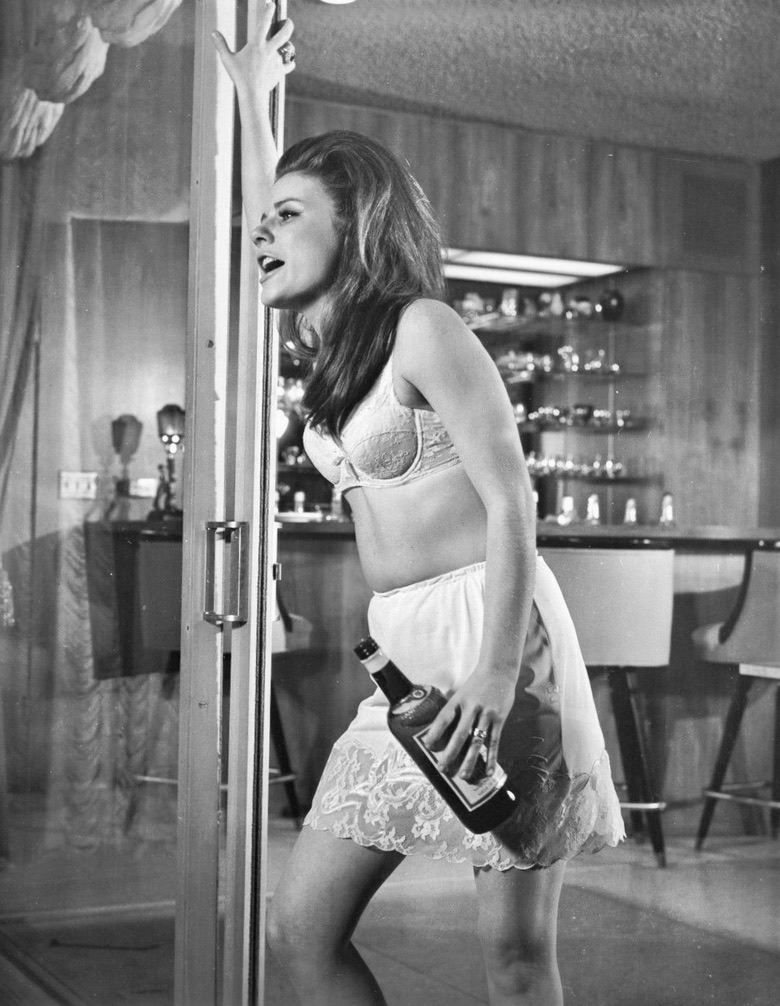
Patty Duke (as the vitriolic singing actress Neely O'Hara) comes home stumbling and drunk to find her husband naked in their pool with another woman.
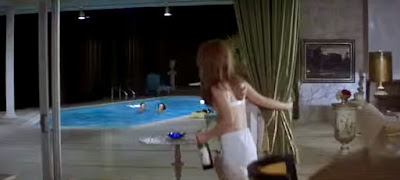 |
Unable to locate her hubby upon arriving home late at night, she hears suspicious sounds while grabbing yet another drink.
|
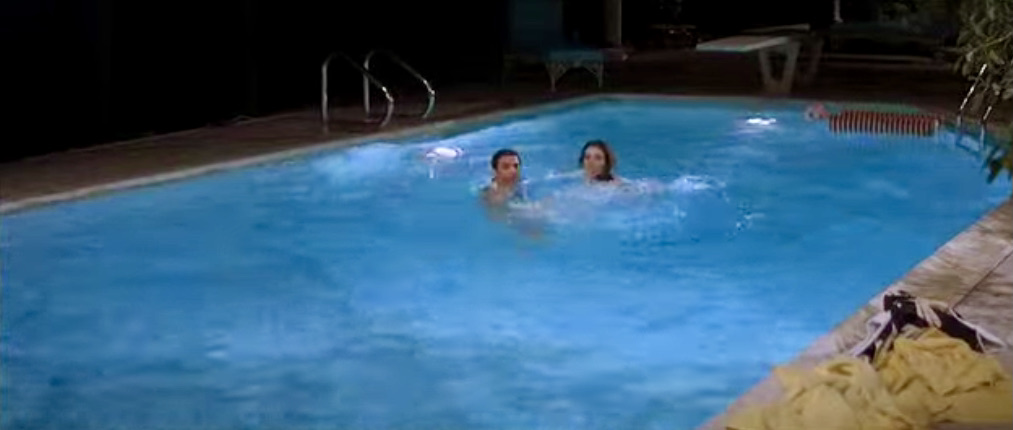 |
| Having already been aware that her husband had been gay before their
marriage, Duke is particularly perturbed to find that he's cheating on
her with another woman! |
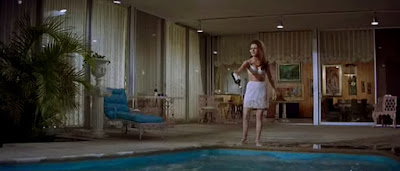 |
During her tirade against the gal who's been caught skinny-dipping with her spouse, Duke empties a bottle of booze into the water to "disinfect" it.
|
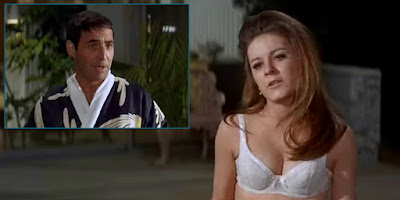 |
When she confronts her husband (Alexander Davion), he explains that his little plaything makes him feel "ten feet tall."
|
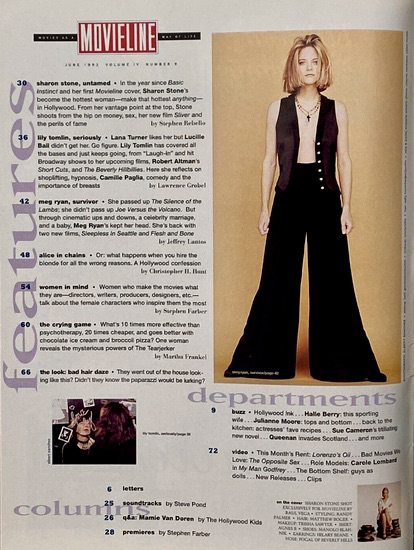
I've loved this movie from the first moment I ever laid eyes on it (sometime in the late-1980s) and also enjoyed reading the source novel. Recently, as part of a Christmas present (derived from Amazon gift cards), I received and read the book Dolls! Dolls! Dolls! by Stephen Rebello. If you don't know, Rebello was once half of "The Hollywood Kids," gossip mavens of Movieline magazine (basically the best film-oriented magazine ever to have been published as far as I'm concerned!) He and his late writing partner Edward Margulies interviewed celebs who were often past their "best if sold by" date and would run saucy blind items in their column. They also had a regular feature called "Bad Movies We Love" which led to the compilation book of the same name, my own cultural Bible... Rebello had done a very well-received book on
Psycho (1960) in 1990 before penning this highly in-depth examination of
Dolls. (The Contents page shown above-right from Movieline depicts
The Opposite Sex, 1956, as that month's "Bad Movie We Love" and Mamie Van Doren as the Q&A subject, along with a feature interview by Rebello with then-hot Sharon Stone.)
Anyway, the scenario involving Duke walking in on her cheating husband was hardly a novel concept (in fiction or in life!), but in Dolls! Dolls! Dolls!, Rebello made a suggestion as to what inspired Susann to include that interlude in her novel. Nestled in the fact-heavy tome of his was this gossipy nugget:
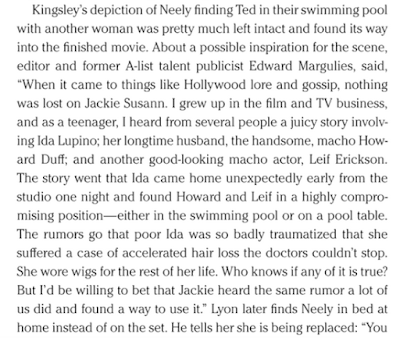 |
"Kingsley" refers to one of the scriptwriters assigned to adapting the novel for the screen. Rebello quotes his close associate Margulies for this tinsel-tale, which I must say I had never heard before (nor could I locate any reference to it anyplace else!) But it was so startling I just had to examine it a little bit further.
|
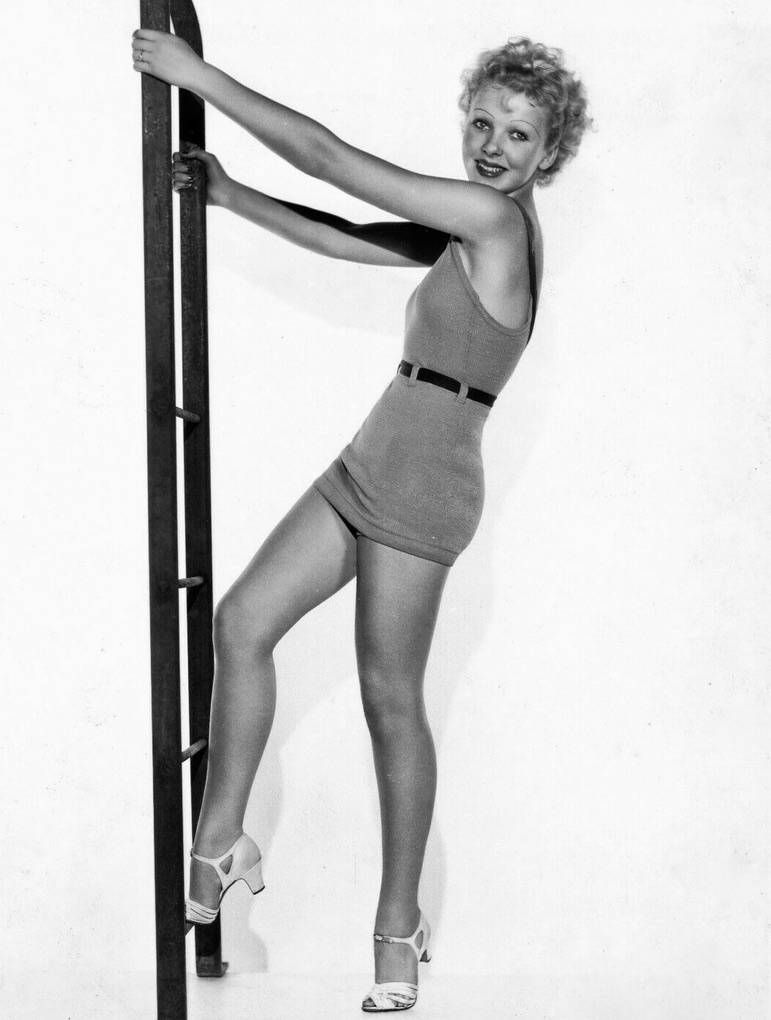
Ida Lupino was a noted actress, born in London to a family long-immersed in show business. She had no longing to be a performer herself, preferring writing, but was pressured into it as a result of her family legacy. Nevertheless, she excelled and was playing juicy supporting roles on stage and screen while still in her mid-teens! Initially working in England, she ultimately wound up in Hollywood in 1933 and was presented in
Search for Beauty (1934) as one of many young people who exemplified physical excellence. Her hair bleached platinum and her eyebrows tweezed nearly away, she scarcely resembled the woman we'd later come to know.
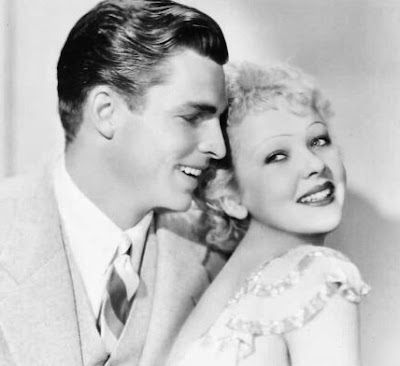 |
Her costar in Search for Beauty was the deliriously handsome Buster Crabbe, who later became known for his serials as Flash Gordon and Buck Rogers.
|
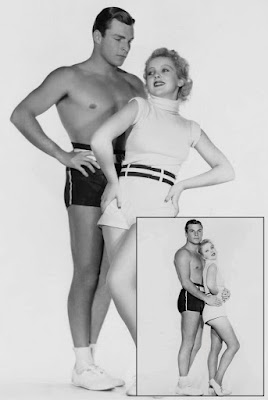 |
As far as I'm concerned, the search for beauty definitely came to its conclusion when the cameras landed on Mr. Crabbe...!
|
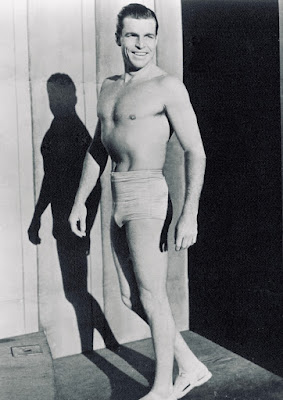 |
| You'll forgive this brief diversion from the topic at hand, I'm sure? |
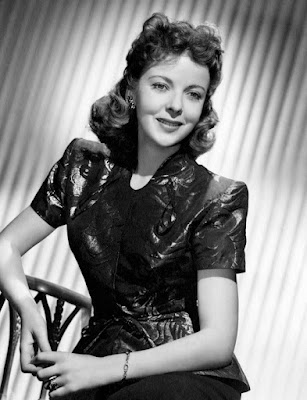 |
Eventually reverting to a more believable hair color and allowing her brows to come back in, Lupino emerged in the 1940s (following a breakthrough in 1939's The Light That Failed) as a popular and dependable leading lady in many key films, many of which have only grown in appreciation over the years. They include: They Drive by Night (1940), High Sierra (1941), The Hard Way (1943), Devotion (1946) and Road House (1948.) Slim and pretty, Lupino had a lifelong disdain for her looks, never finding herself beautiful, though movie cameras sometimes proved otherwise. She had particularly lovely eyes, which reflected light in a striking way on screen.
|
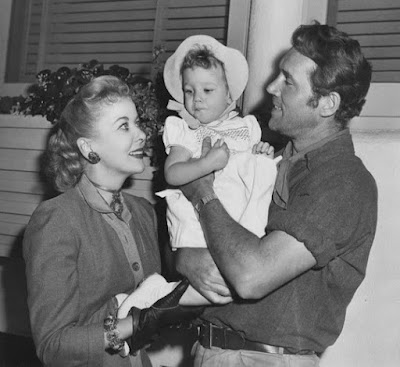 |
Lupino had been married to actor Louis Hayward from 1938-1945 and to writer Collier Young from 1948-1951, but she left him for Howard Duff. She was actually pregnant with Duff's child when they wed in 1951 and their only child, Bridget, was born the following year. She and Duff had met during the filming of 1950's Woman in Hiding.
|
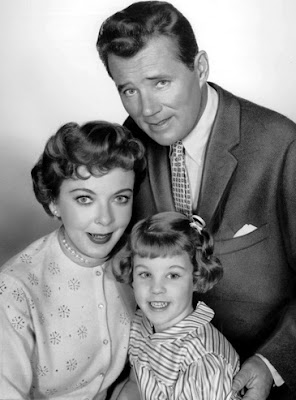 |
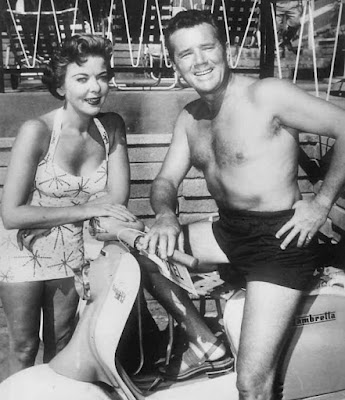
From the outside looking in, The Duffs were happy as clams. They made four more movies together in the 1950s, worked on TV in the same shows and dove into the movie magazine publicity machine with gusto.
|
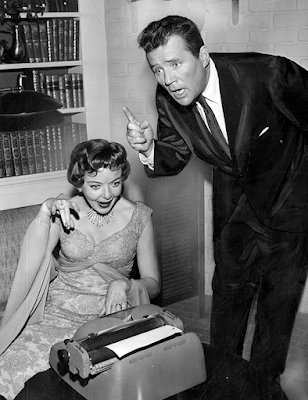 |
They even starred in a TV sitcom of their own called Mr. Adams and Eve, a series created and produced by her ex-husband Young using (and exaggerating) events from her current marriage into comic showbiz fodder. It ran for two seasons.
|
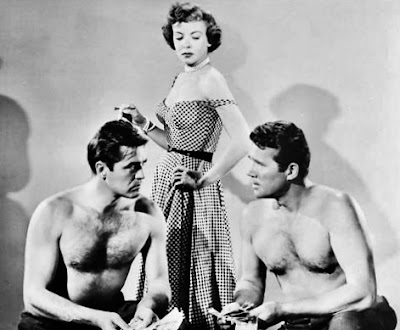 |
Their off-screen life was quite tumultuous, however. (Scene above is from their collaboration with humpy Steve Cochran, Private Hell 36, 1954.) There were disagreements, blowups, separations... These were followed by periods of happy reconciliation. Lupino was known to have a stubborn streak and Duff was rough & ready with his fists, occasionally indulging in physical altercations over this and that. But did he really ever step out on her with a man??
|
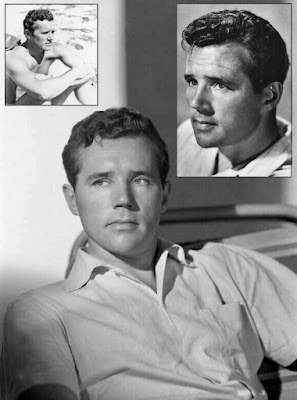 |
Forlornly handsome Duff parlayed his service in the US Army Air Corp as a radio broadcaster into a post-war gig on the radio with "The Adventures of Sam Spade." His rich voice was familiar to many a listener from 1946-1950. (He also pursued work in movies from 1947 on. His debut in Brute Force, 1947, billed him as "Radio's Sam Spade" Howard Duff.)
|
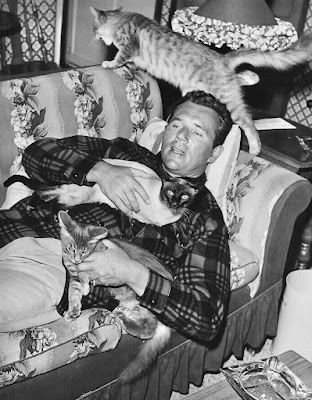 |
Duff had long been known as a real ladies man and was very fond of puss - no, I won't say it! Ha ha!! But nonetheless he was crawling in it during his early days as a radio and motion picture actor.
|
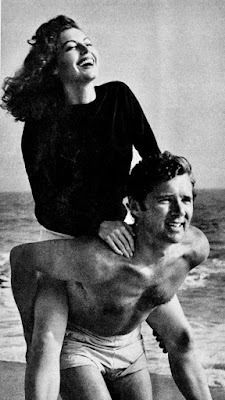 |
One of his most publicized romances early on was with feisty Ava Gardner. The two had a roller-coaster relationship (as did most anyone when it came to her!) Many years later, these two reunited on Knots Landing as the parents of William Devane's character!
|
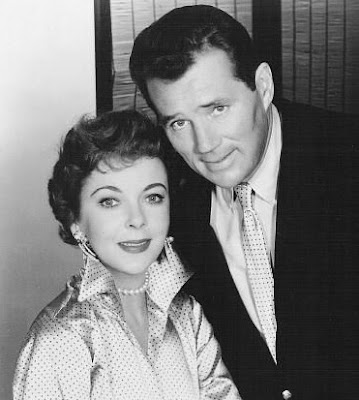 |
Thanks to their affair and the resultant pregnancy, there wasn't a lot of choice at that time when it came to marrying Lupino. But regardless of anything else, there was genuine feeling between them. They clearly enjoyed one another's company. Still, speculation has also been raised that his marrying an established and much-liked star such as Lupino helped him avoid being blacklisted during the McCarthy witch hunt. You see, Duff had been named in the infamous publication Red Channels as a possible Communist. And Universal did not renew his contract when it expired. But what about this Leif Erickson thing?
|
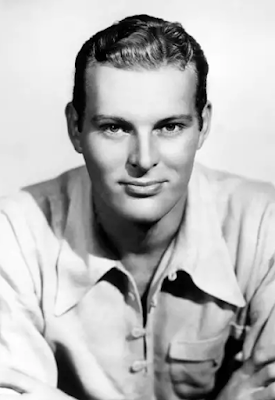 |
6'3" Leif Erickson was a US Navy combat photographer who was shot down twice during WWII and earned Purple Hearts in the process. Working as a cowboy in some Zane Grey serials, he was married to the highly unstable Frances Farmer from 1936-1942, followed by a month-long union with actress Margaret Hayes. In 1945, he wed for a final time, which lasted until his death in 1986.
|
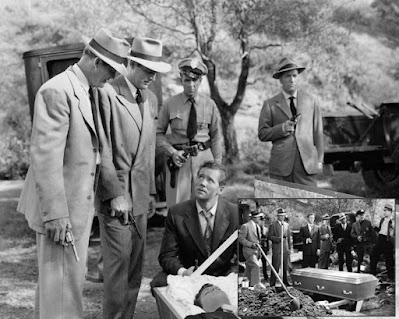 |
He and Duff did know one another, working together in 1949's Johnny Stool Pigeon. That's Erickson standing near the coffin, with Duff at crotch level. (You know I had to choose this pic for this post!) Could they really have become fond enough of one another to later be discovered canoodling by a distraught Miss Lupino...??
|
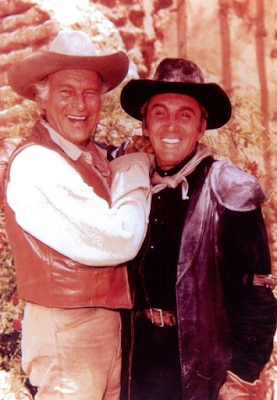 |
Erickson enjoyed a long career in movies and also on stage (he originated the role of the overcompensatingly masculine coach in Broadway's Tea and Sympathy, repeating the part in the watered down film version.) He also popped up in fun flicks like Strait-Jacket (1964), The Carpetbaggers (1964) and I Saw What You Did (1965) among many others. He's probably best-known, though, for his leading role on the TV western The High Chaparral, seen here with costar Cameron Mitchell. We've already taken note of his eye-popping "gun" elsewhere in Poseidon's Underworld.
|
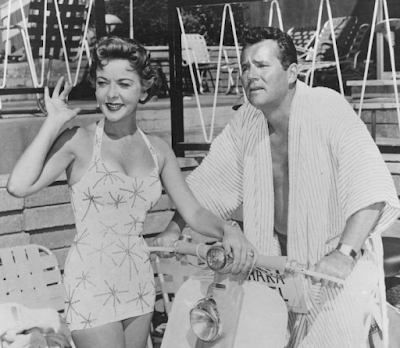 |
You can see for yourself from the pics of Lupino and Duff that she took to wearing (sometimes okay, sometimes horrible) wigs during the course of their marriage. She had suffered a bout of polio upon her arrival in Hollywood (allegedly attributed to contaminated swimming pools!! Scotch anyone?!) But was that why her hair fell out later? Or was it delayed effects from all that early bleaching? Or is there something to this lascivious rumor?
|
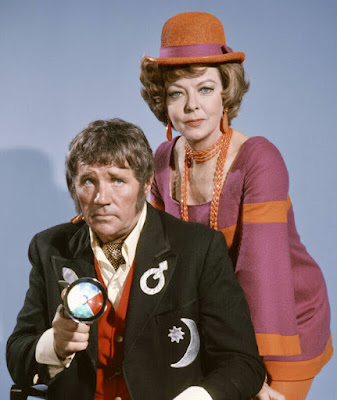 |
On paper, The Duff's marriage lasted till 1984, but it really ended in 1966. Even separated, they continued to work together occasionally, such as in this 1968 appearance on Batman as Dr. Cassandra and her husband Cabala, who are able to turn invisible and commit robberies.
|
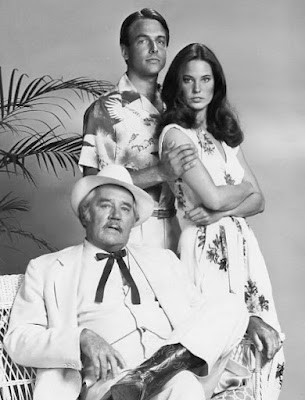 |
Duff was always in demand for television (and was a far greater actor than ever given credit.) He starred on The Felony Squad, did some fine work on Police Story and had a moment of glory as the slimy villain Titus Semple on the short-lived Flamingo Road (seen here with Mark Harmon and Christina Raines.) He died of a heart attack in 1990 at the age of 76, not long after doing The Golden Girls (as the subject of one of Sophia's jinxes.)
|
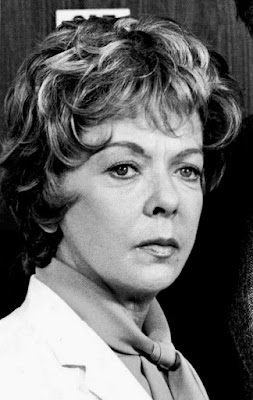 |
Lupino also acted often, but usually to pay the bills and to allow her the leeway to write and direct. She was an accomplished director of tight melodramas with touchy themes like bigamy and rape. Her body of work as a director has been cherished by many film fans and critics and is considered progressive for the time. Those who worked for her were generally highly appreciative of her insight and guidance. She exited the screen by 1979 and her final years were punctuated by alcohol abuse and ill health. She died in 1995 of colon cancer at age 77.
|
 |
I haven't solved anything about this rumor, only examined it a bit as I said I would. It says a lot about "the telephone game" of gossip in general; how the story gets distorted slightly with each telling. I.E. - was the alleged act on a pool table or in a pool?! But perhaps Susann had heard about it and placed a similar scenario in her roman à clef best-seller. (Though I am aware of another rumor in which a young starlet discovered her dreamboat husband getting it on with his butler, leading to divorce! So the Duff-Erickson tale is hardly the only example that was out there.)
|
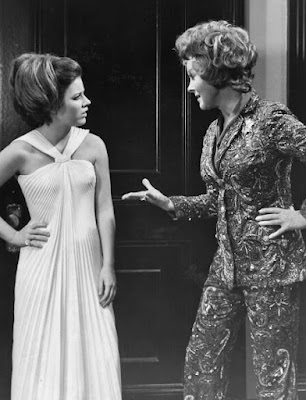 |
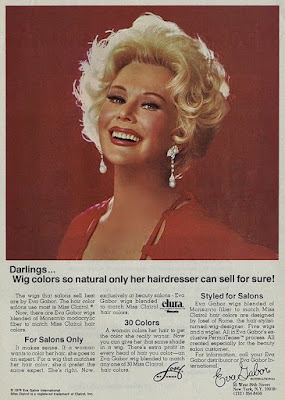
It's surely nothing but coincidence, too, that in Valley of the Dolls, Susan Hayward's wig is similar to the sort that Lupino wore. There were only so many popular styles available. Remember Eva Gabor coming out with a dazzling line of them?!
|
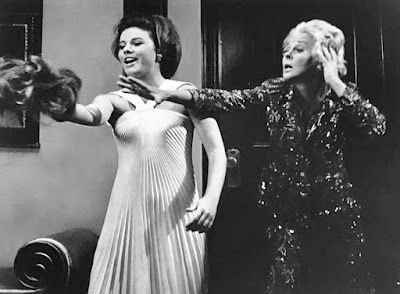 |
If Lupino didn't inspire the swimming pool adultery sequence, maybe she helped give Susann the idea to have Helen Lawson hiding (in the book, at least) a nearly bald head under her wigs. Eventually, Miss Lupino had almost no real hair at all, poor thing.
|
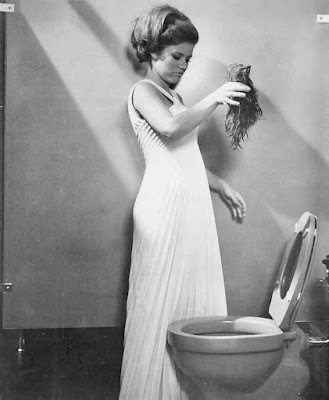 |
And that's about all I can add about this subject before I flush it along...!
|
 |
Till next time, dah-links!
|