
 today's featured star has been in the business for over fifty years now and has seemingly done it all, from feature films alongside big names to hours and hours of television and then to the stage, where she explored new ground for herself. In addition, she has devoted herself to the cause of exotic animals, tirelessly carrying on work that was started by one of her significant partners years ago. As of this writing, she's pushing seventy and has practically the same body as she did when she entered the biz! And the face, while it has been tweaked here and there, has mostly escaped the scary form that so many of her contemporaries' mugs have taken. We're referring, of course, to Miss Stefanie Powers.
Born Stefania Zofya Federkiewicz right in good ol' Hollywood, California to parents of Polish-American descent, she seemed tailor-made for work in show business from the start. Her parents divorcing when she was still a child, her stepfather's last name of Paul helped to sheer off some of the unwieldy moniker she started out with.
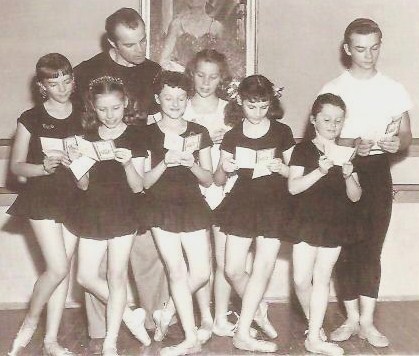
 As noted in another post here at The Underworld, she was part of the local ballet class that included Jill St. John and Natalie Wood. Later, she attended Hollywood High School where one of her classmates was the ever-so-slightly older Nancy Sinatra.
An outgoing and athletic type of girl, she was a cheerleader and later took an interest in the unlikely avocation of bullfighting, taking on her first match at the age of twenty! Shortly after, she became an honorary member of the Mexican Bullfighters Union and eventually invested in a breeding farm.
 Her zesty personality and talent in school productions brought her to the attention of Columbia Pictures where she was signed as a contract player at the tender age of fifteen! She was groomed by the studio in all departments so that she would be ready to perform when they were ready to utilize her in the right project. As the '60s dawned, she adopted the cutesy name of Taffy Paul and began appearing in adolescent roles on such TV shows as The Ann Sothern Show, Lock Up and Bat Masterson. She kept this stage name for her film debut, which was Tammy Tell Me True, the second of three films featuring the title character (Sandra Dee was Tammy in the second and third films, replacing Debbie Reynolds, who had originated the part.)
For her next film, a far bigger showcase, she took the name that she would be forever associated with: Stefanie Powers. The film,
 Experiment in Terror, was a black and white thriller directed by Blake Edwards about a creepy extortionist who calls bank teller Lee Remick up and tells her to steal $100,000 or he'll harm her and her younger sister (Powers.) As Glenn Ford attempts to track down the cretin, Powers is kidnapped and held captive in exchange for the loot. It was the first of many times Powers would play a kidnapping vicitim in her career! Tame by today's standards, it was considered a bit of a nail-biter in its day, though it is not as enduring as Cape Fear, which came out that same year.
 Also in 1962, Powers was part of the sprawling young ensemble found in The Interns, a medical soap opera all about doctors in training and the nurses and others they love. The title characters were played by Michael Callan, Cliff Robertson, James MacArthur, Nick Adams and Haya Harareet (of Ben-Hur fame.) Powers played a nurse in love with MacArthur. (Could there have possibly been a less flattering lobby card issued of her?!) Senior doctors were played by Buddy Ebsen and Telly Savalas! Most astonishing now is how ungodly much the doctors smoke incessantly throughout the film.
  Rounding out the year, she found herself working with Sandra Dee again in If a Man Answers.
  The frothy comedy, produced by Ross Hunter and starring Dee and her real life husband Bobby Darin, was about a series of romantic misadventures between a socialite and her photographer husband. Powers portrayed a pert, but glamorous, school friends of Dee's who complicates the marriage when she starts posing for pictures taken by Darin. The fluffy film (in the Rock & Doris mode, though few could touch them when it came to quality) wound up getting more attention from Cesar Romero's Golden Globe-nominated supporting role than anything else. I do like the way Stef looks in these various still shots, though.
 Occasionally, Powers would be farmed out on TV guest appearances such as on Bonanza where she played Calamity Jane, but she still remained busy in features for the time being. 1963's Palm Springs Weekend was another ensemble movie, this time a frolic rather than a drama. She was loaned to Warner Brothers to play Troy Donahue's love interest. Other names in the cast included Ty Hardin, Connie Stevens and Robert Conrad.
 Next she played the daughter of John Wayne and Maureen O'Hara in the rollicking western McLintock! The estranged couple battle it out while petulant Powers romances The Duke's real life son Patrick (playing someone not Wayne's son in the film.) A semi-remake of The Taming of the Shrew, it included some eye-opening spankings of O'Hara and Powers with a coal shovel! The climax has O'Hara tearing down the street in her bloomers before half the cast winds up in a massive mudhole.
 1964 brought The New Interns, a sequel to The Interns from two years prior. Don't let the smiles to the left fool you. Now a wife married to a novice doctor (played here by Dean Jones instead of the original James MacArthur), her character has, for some reason, been transformed from a perky, friendly girl into an unbelievably shrewy pain in the ass who is hard to lend sympathy to when she discovers that she and her husband are incapable of conceiving a child.
In 1965, she was part of the splashy, gaudy, wonderful Love has Many Faces, a slick soaper about an heiress (Lana Turner) who has married a former gigolo (Cliff Robertson) only to carry on with another one who turns up dead. Powers plays the dead boy's jilted fiance who travels to Acapulco to see for herself what has happened. She winds up catching the eye of Robertson, much to Turner's dismay.
 In a climax that was right up Powers' alley, the cast dressed in bullfighting gear and attended a match. There's already a whole post devoted to this deliciously bad film here, so I won't continue on, but I'll post this shot of Stef and hunky Hugh O'Brian (who she had little to do with in the film) enjoying some fishing while on location.
Powers next traveled to England to make the thriller Die! Die! My Darling! (originally called The Fanatic) with the legendary stage actress Tallulah Bankhead. I won't go on about it now because, like Many Faces, there's a whole post here devoted to the movie. It remains an Underworld favorite.
 After an ill-fated stab at romance with Eddie Fisher, Powers began seeing another young actor who she would eventually marry. Lockwood had been the star of two series that only lasted one year apiece, Follow the Sun and The Lieutenant. He and Powers did an episode of Love, American Style together while married. Though in 1968, he would land a role in the sci-fi sensation 2001: A Space Odyssey, he was never able to attain household name stardom.
In 1966, Powers was among the sizeable cast of Stagecoach, a bloated, color remake of the 1939 John Ford/John Wayne classic.
 Playing a snooty, pregnant passenger on the title vehicle that has to wend its way through Indian territory, she landed pretty far down in the billing with costars including Ann-Margret, Red Buttons, Mike Conners, Alex Cord, Robert Cummings, Van Heflin and, in his final feature film, Bing Crosby. For some reason, she failed to register much in her role, as if she'd given up in the face of the face more showcased A-M. However, like all the other major players, she did have her portrait painted, in character, by the legendary artist Norman Rockwell. Not many people considered the film an improvement on the original, though, and many diehard fans greeted the new version with the same basic reaction as this dead cavalryman to the right.
 Far more important to her recognizability as an actress was an offer to star in her own TV series. The popular spy show The Man from U.N.C.L.E. had inspired the creators to develop a spin-off show featuring a female agent called The Girl from U.N.C.L.E.
  While it stood to reason that the show would be a hit, and Powers was the subject of a major press machine publicizing the project, it would up not satisfying its target audience. The character she played, April Dancer, though outfitted with some gadgets and weapons, was ultimately sort of helpless, relying on her male partner Noel Harrison and failing to ignite the sort of interest that was found in, say, Diana Rigg on The Avengers.
One thing the show did do was capitalize on a few of Powers' skills. For example, one episode featured bullfighting and others called upon her mastery of foreign tongues. Powers is fluent in at least six different languages. The role was played on the parent show by Mary Ann Mobley in one episode, but Powers was ultimately chosen for the series itself. One amusing bit of worthless trivia, a TV Guide article on the show listed Powers at 117 pounds while this paperback book puts her at 108.
 While still appearing on TV as April Dancer, Powers was in movie theaters as part of a film with many interesting actors. Warning Shot, starring David Janssen, had a roster of costars that included Lillian Gish, Joan Collins and Eleanor Parker, to name a few. Intended as a TV-movie, it was released on the big screen instead. A tight and trim little mystery, it's fun mostly as a spot-the-star exercise.
It would be 1970 before Powers appeared in another feature film. She was becoming busy on television (appearing as a guest on the caper series It Takes a Thief starring one Robert Wagner.) The film Crescendo, opposite James Olson, was a Hammer Studios
 chiller about a music student who goes to live in a French villa with the widow of a famous composer who is the subject of her thesis. While there, she is surrounded by mysterious goings on and sinister people and, eventually, some gory murders. The film is notable for containing a nude scene of Powers, but shortly after its initial release, it was cut in order to obtain a less restrictive rating. Thus, some viewers see her in the altogether and some don't, depending on the print.
 1970 also brought work at the Disney Studios where she took part in the maritime comedy The Boatniks. As the proprietor of a sailing school, she played love interest to coast guard ensign Robert Morse. Their relationship is complicated by the arrival of a trio of jewel thieves, Phil Silvers, Norman Fell and Mickey Shaughnessey. At least she also got to work with veteran actor Don Ameche who appeared as Morse's demanding commander.
The year 1971 was made up of several TV-movies,
 that period being a great one for amusingly pat, yet arresting , ninety minute gems. Five Desperate Women had her trapped on an island with four other ladies and a questionable Robert Conrad. Sweet, Sweet Rachel, the pilot movie for the series The Sixth Sense, centered on ESP being used to catch a psychic using telepathy to commit murder. Paper Man (a surprisingly prescient concept) had Dean Stockwell and a group of other college students creating a person that only exists on paper so that they can run up bills under his name and use a (huge!) computer to cover their tracks. Trouble is, someone decides to start killing off the people involved! She rounded out the year with a role in an Ellery Queen mystery pilot starring Peter Lawford as the sleuth.
Appearing on the big screen again in 1972, she was the unlikely love interest to Lee Van Cleef
 (close to two decades her senior) in The Magnificent Seven Ride! This fourth movie in the series (by now purely exhausted) was both inferior and close to being wildly inappropriate. Powers played a widow trapped in a Mexican village where she and sixteen other women have been brutalized and repeatedly raped. Yet, when the Magnificent Seven arrive, the ladies get all goo-goo eyed over them and Powers starts to fall for Van Cleef when her husband's barely cold! Powers' marriage to Gary Lockwood ended this same year.
 This was about the time that Powers became a heavily familiar face to TV viewers. She did five separate appearances on Love, American Style, appeared on Banacek, The Mod Squad, The Sixth Sense, Barnaby Jones, McCloud, Marcus Welby, M.D., four different episodes of Medical Center. You can pretty much name it. She also did an update of the famous Topper films for TV called Topper Returns. This one starred Roddy McDowall as Topper and had Stefanie and someone named John Fink as the ghostly couple (in this rendition, still in their 1940s guises and bemused by the advanced 1970s.)
The '70s being a primo period for disaster, she was one of the passengers caught in a broken down tram in Skyway to Death. Then it was back to the Disney folks for Herbie Rides Again,
 the first sequel to The Love Bug, to be followed by several more. This one starred Ken Barry and had Powers playing an airline stewardess caught up in Herbie's misadventures. Again, she at least got to work with an esteemed film and stage veteran, this time Miss Helen Hayes, though was hardly a prestigious project for either one of them. Thankfully, she didn't have to take part in Herbie Goes to Monte Carlo or Herbie Goes Bananas (or Herbie Gets his Oil Changed??)
 You know, I like Stefanie Powers a lot. Always have.
  This is not to say that she didn't appear in a fair share of complete drek. Falling squarely into that category is one of the worst movies I have ever seen and, trust me, I've seen a LOT! Gone With the West is a total and complete mess, despite a cast that includes James Caan, Sammy Davis Jr. and Aldo Ray. She plays an American Indian (who somehow has a Spanish accent) and, though the movie is dreadfully written, shot, edited and scored, she is far from the worst thing in it. Even this is considered better than her next one, though, a dastardly comedy called It Seemed Like a Good Idea at the Time, a slapdash project that somehow managed to involve Anthony Newley, Lloyd Bochner, Issac Hayes, Yvonne de Carlo and John Candy!
 Much work on TV continued until she landed a series of her own. The Feather and Father Gang had Powers as a Los Angeles attorney who utilizes her con man father (played by Harold Gould) to help sting various bad guys into revealing themselves to the law. For it, she was given a somewhat more cosmopolitan look than she'd been displaying in recent years. Gould (a veteran actor who would later play Miles, Rose's boyfriend, on The Golden Girls) and Powers got a fair amount of press and commercial publicity for the series, but it failed to catch on and was gone after just over a dozen episodes.
Powers had done quite a bit of guest star appearances and appeared in many telefilms, sometimes with titles so close to each other as to be absurd. For example, she was in No Place to Run in 1972
 and then Nowhere to Run in 1978! One of the very best ones was a harrowing drama called A Death in Canaan, which cast her as a crusading woman attempting to vindicate a teenage boy who's been accused of viciously murdering his own mother. As an eleven year-old, I caught this (based on a true story) one and it stuck with me forever after. Brian Dennehy and Conchata Ferrell costarred while Paul Clemens (Eleanor Parker's son in real life) played the teen.
 1979 found Stef in quite an unlikely role, that of a WWII entertainer turned art heist participant in Escape to Athena. The unbelievable cast included Roger Moore, David Niven, Elliott Gould, Telly Savalas, Claudia Cardinale, Richard Roundtree and Sonny Bono! Believe it or not, the film actually attempts to be taken seriously despite the inclusion of some of the participants. It does not succeed particularly well! Gould and Powers play man and wife. Gould is excruciating as he could often be during this period while Powers is called upon to strip for Nazi commandant Moore(!) She, as a trained swimmer, is then required to don a wetsuit and take further part in the plan. The whole thing might have been better off as a two-part episode of Fantasy Island, though at least some of the comedy was intentional.
 Fortunately, a far more popular project was on the horizon by now. Aaron Spelling was planning another in a long line of successful television shows and wanted to pair Robert Wagner and Natalie Wood in this one, a contemporary spin on Nick and Nora Charles, a society couple who keep finding themselves ensconced in mysteries (frequently including murder.) Wagner was onboard, but it was decided to go with someone other than his real life wife Natalie. Eventually, Powers, who had worked with Wagner on his show It Takes a Thief, was mentioned (after bandying about Suzanne Pleshette and Lindsay Wagner as possibilities) and ultimately won the role.
From the start, chemistry between the leads was magical. The show Hart to Hart was a success and offered viewers a marriage that had never lost its spark.
 Wagner and Powers were wealthy, elegant, clever and inventive. Their in-house butler Max, played by showbiz veteran Lionel Stander, frequently pitched in along with narrating the memorable opening credits. Set to pulsating music, he introduced The Harts, referring to Powers as, “gorgeous” and she was. Her once rather tautly-drawn features had relaxed into an elegant, sophisticated visage. Then he said, “I look after them, which ain't easy. 'Cause their hobby is... murder!” (Later, due apparently to some dunderheaded viewers who might thin that the leads were killers, the line was changed to, “ 'Cause when they met, it was murder!” This made absolutely no sense at all... The show wasn't about when they met and it wasn't murder, in any case!) Lovable canine Freeway rounded out the foursome of regular characters.
 Anyway, the crimes involved in the show were incidental. What drew viewers to the series was the glittering repartee of the lead couple. They were very much in love, but not above teasing each other, and were typically given sexy bits of dialogue, often courtesy of frequent writer Tom Mankiewicz whose father Joe was a tremendous writer-director. Powers was dressed by Nolan Miller, who would later make a huge splash with Dynasty. It was a light, sometimes silly, but endearing, program with a degree of class that tended to be lacking in the late '70s. She was nominated for an Emmy twice and for a Golden Globe fives times, one for each year the series aired.
 Though there was never any romantic involvement between R.J. and Stefanie, they became closely identified with one another due to the magical chemistry they had created together on the show. They frequently appeared together on awards shows or other special occasions. Considering that Wagner claims to have had a longstanding sexual affair with Barbara Stanwyck and we cannot see his hands in this snap, I will leave it up to your imagination as to what was giving Babs this startled expression at an industry event!
 Both stars received major blows to their personal lives during the run of Hart to Hart and would lean on each other at times for emotional support. Natalie Wood's mysterious and sudden death by drowning was a living nightmare for Wagner while William Holden's death due to an accident paired with alcohol abuse was a heartbreak to Powers. She and Holden had enjoyed a lengthy and fascinating romance during the mid-to-late '70s that included world travel, particularly to regions of Africa where Holden was working hard on preservation causes.
 Running until 1984, Hart to Hart kept Powers busy. When it ended, she began working in a string of TV-movies and miniseries (the '80s being a major decade for that format.) There was Mistral's Daughter, all about a Picasso-esque painter (Stacy Keach) who compromises with the Nazis during WW in order to continue working; a decision that will come back to haunt him. Then there was the hilarious Deceptions, all about vastly different twin sisters (both played, of course, by Powers) who decide to swap lives on a lark and then wind up unable to switch back as soon as they'd wished. Costarring Barry Bostwick and Brenda Vaccaro (and including an appearance by Gina Lollobrigida!), it boasts some beautiful Venice locations, solid acting from Powers and some hilariously hideous '80s hairdos.
 Powers never worked on a primetime soap, but got as close as she ever would when she took a role in the Jackie Collins trashterpiece Hollywood Wives. The gargantuan miniseries boasted a wonderful assortment of performers indulging in every conceivable type of nasty behavior. Powers' character was mostly above it all, married to Anthony Hopkins (!) and hobnobbing with Candice Bergen, Angie Dickinson, Rod Steiger, Suzanne Somers and many others. More serious endeavors included At Mother's Request, about a woman who coerces her sons into killing her parents, and Beryl Markham: Shadow on the Sun, based on a true story concerning a renowned hunter, horsewoman and aviatrix.
 After many such endeavors, she and Robert Wagner (who had kept in touch and had even toured in, what was for a while a tremendously successful play for popular couples, Love Letters) decided to revisit their old series. 1993 brought Hart to Hart Returns. Jonathan and Jennifer Hart, almost a decade older than they were at the end of the original run, but still looking quite attractive, were back to solving mysteries, this time in two hour TV-movie events.
 There were eight of these in all, several on ABC and the rest on The Family Channel, a now-defunct cable station (I'm sure it morphed into something... ABC Family maybe?) By the early '90s, ostentatious glamour was a rare thing, so The Harts tended towards more casual clothing and settings, but occasionally would drag out the tuxedos and ball gowns. (One of the telefilms had Wagner's old pal Joan Collins as a guest, so you knew there was going to be some glitz in that one!) Powers also remarried in 1993 to a man named Patrick Houitte de la Chesnais, but it only lasted until 1999.
 When William Holden died in 1981, Powers took up his cause of conservation and wildlife preservation/protection. She and his existing partners, from a property he had long supported, created The William Holden Wildlife Foundation. The 1,800 acre ranch and education center in Kenya houses thirty-seven species of animals who were in danger of extinction due to over-hunting, poaching and population encroachment. The foundation has also built four libraries at several African schools. This dedication to the cause is remarkable in that she and Holden had actually ended their relationship prior to his death, but the devotion to these animals and the land had stayed important to her nonetheless.
Powers also had branched into stage acting, several of the projects being musicals, in an effort to explore otherwise untapped challenges. Aside from Love Letters (which had won her The Sarah Siddons Award), some of the shows she appeared in include Mame, Applause, The Vagina Monologues and, rather surprisingly, The King and I, in the role of Anna Leonowens!
 One of her moved beloved projects was a West End London production of Matador starring John Barrowman. Powers played an Ava Gardner-esque actress. A severe downturn in tourism caused by the first Persian Gulf War helped lead to an early closing for the show and the cast album was canceled the day before it was to be recorded.
In an almost unbelievable chain of events, considering how closely identified Powers has been with Wagner for three decades, some sort of misunderstanding occurred between them and their desire to work on further Hart to Hart mysteries. The seeds of it were planted when Powers felt that five years of touring in Love Letters was plenty, but Wagner wanted to keep doing it. His current wife Jill St. John took that over, so no harm, no foul (unless you count Wagner dissing Stefanie's acting over Jill's in his auto-bio.) Wagner next took exception to the fact that Powers wanted to pursue a stage opportunity when there was all sorts of money on the table for more Hart movies. He accused her of betraying him and the crew and their fans (she had made, after all, EIGHT movies - not six as his book states - and longed for new pastures.) Finally, when she suggested another reunion movie about ten years after that, he balked, saying he wasn't about to give Angela Lansbury a run for her money in senior crime-solving. Whatever...

 Powers, though, has always been known for her sunny personality no matter what events befall her. Having worked with some of the most notable personalities Hollywood has to offer, whether in her feature films, TV-movies or during her five-year tenure on Hart to Hart, she has probably seen it all! She wrote and released an autobiography last year (which I have yet to read. I tend to be a good two to three years behind on those!) and has developed a cabaret act which she performed in both L.A. and New York City. (See sepia-toned shot above.) Now sixty-eight, she continues to stay active with her wildlife causes and with her acting career.
  She also attends many social functions (such as the premiere of I Love You Phillip Morris, at which these shots in black were taken. Lookin' good, lady!) She's a hit in The Underworld as much for her distinctive voice and method of speaking as she is for her beguiling personality and lovely looks. Somehow, despite a career that's lasted over half a century, I don't think she's altogether finished yet. Hopefully, she can find a vehicle to further show off her many (some yet untapped) talents.



 Guest-starring as the operators of a mysterious and sinister


 The result was a short-lived series, now correctly called Tabitha, starring pert, perky Lisa Hartman and handsome Robert Urich.


 The first regular episode of Buck Rogers in the 25th Century (the two-hour pilot having been released as a feature film) had Gil Gerard enjoying a spacious bath while visiting a wealthy planet. (I know that the first episode of the series isn’t always the same as the pilot,


