Well, I've gone and stumbled upon another find: a trio of magazines from the early '80s that focus on the glory days of the film industry.  Called Hollywood Studio Magazine, it was a black and white monthly, with a color front and back cover, that contained articles on classic stars, plenty of vintage still photos and the occasional nod to the stars and happenings of the present day. Most interesting to me was the information on events that were heavily attended by older stars who, by then, were not making the rounds too much at occasions covered by the more prominent mainstream press. (In order to enlarge these to full size, you will have to click on them, then - if they go into that new photo viewer, which limits the size - click on "Show Original" and the pages will open in a larger size in a new window. Sorry, but that's the way Blogger is these days...)
The first issue I retrieved, from 1982, profiles the then-fairly-recent,  tragic deaths of William Holden and Natalie Wood (oddly enough, the former longtime companion and wife, respectively, of (still airing) Hart to Hart co-stars Stefanie Powers and Robert Wagner.) Along with the articles, there are collections of photos from their lengthy careers. Looking at the shot of Holden from Golden Boy, his debut, you can really see how quickly he aged in the years beyond that (from a combination of sun, booze and cigarettes), though he still remained handsome for several years afterwards. Though the magazine relied heavily on still photos, an occasional rare shot like the one with him and George Brent occasionally saw print.
 You know that if I'm going to scan anything, I'm going to scan the male shirtless shots! Thus, in the Natalie Wood retrospective, we have both Jeffrey Hunter and William Devane (from the TV miniseries From Here to Eternity) on display. The attendant articles don't shed any remarkable light on either death, but there are plenty of tributes to both stars from people they worked with. Interestingly, recovering alcoholic Dana Andrews is quoted as saying the the media was correct in emphasizing the presence of alcohol in both deaths as it inevitably contributed to them.
Hollywood Studio Magazine featured a regular segment called Man About Town by one-time bit actor-turned-columnist Lee Graham. By the time of this set of magazines,  the great era of Hollywood gossip columnists and reporters had faded (soon to be replaced by a set of tabloid journalists who saw print in various products like The National Enquirer and Star Magazine.) HSM gave Graham a home base from which to continue printing updates on the stars from his era. Check out the descriptive way he profiles Liberace in this edition of the column.
There's also mention of Mickey Rooney, then riding high with Sugar Babies on The Great White Way. The article refers to a future Broadway project that never actually came to fruition. Then there's the odd item about his agent and her three most unusual pets. There was a bizarre accident at the party, though apparently no one was seriously hurt.  Lee Graham himself appears far right in the photo with Mickey, Mickey's wife Jan (to whom he remains wed still today!) and others.
On the following page, the celebrity chit-chat continues. There's mention of Carol Lawrence's recent engagement (the marriage would only last about a year.) She's shown with Hugh O'Brian and Foster Brooks. Below are Barbara Stanwyck with long ago costar Burt Lancaster and another photo with former child-star Jane Withers and Marsha Hunt, a victim of the 1950s Communist witch hunt/blacklist. These are the types of pictures I think make this magazine so collectible now because they are so rare and unique.
 Then we have an article by the number one “fan/friend” of Miss Ann Miller. The devotee fell in (platonic??) love with her as a child, watching her films at a neighborhood theater, and began collecting photos and other memorabilia concerning her from then on. Having inspired him to become a dancer in his own right, he later met up with her and they formed a friendly relationship (she being impressed by the gargantuan assemblage of items he had collected over the years and brought to share with her at a rehearsal space.)
I enjoyed these various shots of Miller,  but my favorite is the one of her with Edith Head because it was taken at a time when you tended to see less of her. She had a fairly dormant period after her days in those classic musicals before swinging back into the spotlight with Broadway's Sugar Babies. I've always been fond of Ann Miller, but after seeing her on a TCM Private Screenings one-on-one with Robert Osborne, I started to appreciate her even more. Below is a link that has become something of a recent obsession of mine. The whole thing is a bizarre scream, but at the 9:15 mark, I always develop an ear-to-ear grin and proceed to sing that song for hours afterward.
http://www.youtube.com/watch?v=Qi-iFKmuOu8
 The back cover has an ad/offer for a personally signed print featuring the career of Mr. Burt Reynolds. Am I crazy for thinking that $100 in 1982 currency was more than a bit steep for this?! Perhaps they are hard to find and have retained their value, but I'm a tad doubtful... Of seemingly greater value are the ones shown below of stars from an earlier era such as Mae West, Ray Bolger and many others.
The second issue I picked up in from 1983. It features Robert Wagner (with Natalie Wood) on the cover, billing him as "TV's Classiest Actor." An article inside relates the way his persona recalls the glamorous and debonair qualities of the golden age of Hollywood and describes how he is continuing to work through the death of Wood along with their children (and with the aid of constant companion Jill St. John.) His charity work with The American Heart Association is also revealed.
 This issue's Man About Town article depicts a variety of stars attending an event honoring Danny Thomas for his work with St. Jude Children's Research Hospital. There is mention in the text of Erik Estrada and his "fiancee" Kathy Showers (no wedding ever took place.) Also reported is Dorothy Lamour's recent cabaret act along with a shot of her getting a smooch from attendee Robert Mitchum.
One thing that stands out here for me is the reportage of an AIDS benefit; a show called "Women Behind Bars" that spoofs women's prison movies. It's good to see that some sort of work was being done in Hollywood during this still-early stage of the disease.  Rock Hudson, one of the the most prominent celebrities to be claimed by AIDS, didn't die from it until 1985, after which it seemed to become far more heavily reported upon and discussed. Even amfAR wasn't founded until 1985, having been formed by two separate organizations on opposite coasts, one of which started up in 1983. So it's remarkable and satisfying to see that efforts were being made earlier and by less-publicized celebrities. Patti Page and Adele Jergens (one of the ladies shown recently in my Halloween post of cheesecake photos) are among those pictured.
And are you ready for the reported cast of a production of Cat on a Hot Tin Roof?? Pat Hingle as Big Daddy, Alice Ghostley as Big Mama, Kirstie Alley as Maggie the Cat and Patty (The Bad Seed) McCormack as Sister Woman! No mention of who played Brick in this stunner... Now you know I wasn't about to let such a mystery rest, so I looked it up!  Brick was played by the less-famous actor James Morrison who has nonetheless carved out a lengthy and enduring career as a character actor, best known probably for his recurring role on 24 over the course of several seasons. This is him then and now.
Finally, there's reportage on a (failed?) musical based on the life of Charlie Chaplin, portrayed by Anthony Newley (who also likely composed the songs for this as well.)
Here, at the end of the issue, is a remembrance of David Niven by former actress-turned-writer/editor Joan Evans. (See more about Evans at the tail end of this post!) She offers up a rarely told account of Niven's devilish sense of humor when it came to sharing his income with their stingy boss Samuel Goldwyn. Niven died in 1983, thus the timing of this tribute to what many people considered a talented, witty and wonderful man .
.
 The bulk of my scans come from the third issue I picked up, from early 1985. The cover shot is of Clark Gable and Vivien Leigh from Gone with the Wind. You know, I've seen GWTW countless times, but I have no memory of the outfit Scarlett is wearing here! Did she really appear in this in the final cut and, if so, how did I miss that mammoth brooch at her neck?
There's a feature on a recently released book by prolific author and celebrity biographer Douglas McClelland called Hollywood on Hollywood: Tinsel Town Talks. The tome was apparently loaded down with collected opinions on the film capitol from stars of every size, shape, stature and era. There are a few amusing quotes chosen for the article and a deliciously gauzy photo of Miss Joan Fontaine.

 This time, in addition to his Man About Town column, Lee Graham reports on the recent second annual American Cinema Awards (I've never even heard of them! Are they still given out or did they go the way of the recent TVLand Awards...) The event honored my kind of stars: Dorothy McGuire, Robert Mitchum, Robert Preston and Jane Wyman. You can keep your Mira Sorvinos and Cuba Gooding Juniors!
How neat to see then-ninety-two year-old Ina Claire making a very rare appearance. There's a fun and rare reunion of Pollyanna costars Hayley Mills and Jane Wyman.  And what about gay favorite Guy Madison, older. but still quite handsome. (He would have been about sixty-three here.) The second page offers up even more old stars, including John Payne (who would have been around seventy-three here!), Ruby Keeler, Virginia Mayo and Rock Hudson (who, if you'll recall, would soon be passing away...) But who was it who threw together this tribute to the olden days? That I will not reveal, but will let you discover when you click on the article and read the final sentence! Let's just say he was a man good at bringing the near-dormant back to life!
 There's a two-page article on ill-fated hunk Jon-Erik Hexum (who is profiled here at The Underworld.) The piece is written by a man described as a writer-photographer, but who is revealed within the text to be more of a costumer/wardrobe man. I have no idea what went on between the two, but if you read the article it is more than clear that Brian had - at minimum - an attraction for Hexum.
  Whether it was ever reciprocated I don't know and probably never will. However, as the man in charge of dressing Hexum on Voyagers and then Cover-Up, he may very well have had one of the greatest jobs in the history of show business!
The Man About Town segment in this issue has a lot of chatter about various events, none of them earth-shaking. Still, it's fun to read through and hear about the celebs that the author had been hobnobbing with.

 The cover of the magazine promises a Gone with the Wind centerfold poster. This is fortunately still there, intact, though it's nothing to shoot the cat over. It doesn't even include Miss Olivia "Melanie" de Havilland at all! Nonetheless, not wanting to disappoint my readers, I have scanned it and soldered it together for you.
 Douglas McClelland, the author mentioned above, also provided a review of the recently released compilation film That's Dancing!, a Terpsichorean documentary made to cash in on the success of the prior That's Entertainment and That's Entertainment Part II. He bemoans the pedestrian nature of the project and the lack of Rita Hayworth and Betty Grable while wishing there had been more of Dan Dailey as well.
 In what seemed to be a recurring facet of Hollywood Studio Magazine, there was a personal recollection of another star by a lesser-known person who worked with him. Fledgling English actor Patrick Brock relates his experiences working with legendary swashbuckler and lady-killer Errol Flynn towards the end of his life.
There's an article about Oscar-winning supporting actress Alice Brady  (for In Old Chicago, 1937) whose career was cut short by illness. A few years ago, thanks to an Internet blind item, a rumor spread like wildfire that Alice Brady was actually a man posing as a woman! Her early life is fairly well documented, so this is virtually disproven, if it ever even needed to be. (Never mind the fact that she gave birth to a son in the early 1920s!)
Interestingly, this issue contained a photo of then-hot (and still active today) actor Tom Selleck, reading a copy of the magazine. He is described as being one of the two sexiest stars working at the time (the other being Mel Gibson!)
After debuting in the late '60s, this periodical continued for quite a few years. There isn't a great deal out there about it, but I am pretty sure that, in time, it morphed into the magazine Hollywood Then and Now before finally petering out in the mid-'90s(?) I have seen various issues for sale on eBay for upwards of $8.00, sometimes quite a bit more, so I was more than thrilled to nab all three of these in one fell swoop for the very reasonable price of $3.00 total!
 This magazine was edited, for at least a significant part of its existence, by Joan Evans Weatherly. Evans was the daughter of Hollywood writers Dale Eunson and Katherine Albert. They were close friends of Joan Crawford, for whom Evans was named and whose godmother of Evans she was. Signed to a contract with Samuel Goldwyn at the impossibly young age of fourteen (but augmented to sixteen by her mother in an attempt to diffuse the way such a fact appeared), she was featured as the title character in her very first movie, Roseanna McCoy, opposite Farley Granger. It was a love story based on the Hatfield and McCoy feuds of Appalachia.
 Within a couple of years, at the age of seventeen, Evans made up her mind to marry a car salesman she loved, but her parents were aghast at the idea. They asked Evans' godmother and mentor Crawford to “talk some sense into her” and squelch the idea. For whatever reason, Crawford supported the union and instead held a wedding at her home for the couple, completely circumventing Eunson and Albert's wishes (not even inviting them!) Albert never again spoke to Crawford and Eunson, author of The Star, was suspected of lacing that screenplay with unflattering attributes that mirrored Crawford's ways.
 The laugh was on them, though, because not only did the marriage last beyond the demise of everyone else involved and result in two children, but Evans and her husband Kirby Weatherly remain wed to this day, nearly 60 years later! They now reside in Nevada. Crawford must have somehow sensed, despite her own rocky choices when it came to romance, that this was the real deal!
I hope you got a kick out of this latest "Fun Find." I try to share my unusual discoveries here whenever I'm able to.
In the earliest days of The Underworld's existence, I set about doing tributes to virtually every 1970s disaster film. It's the genre that is by far my favorite. When I'd finally worked my way through all the major examples, I realized that I had somehow left out one: 1974's Juggernaut.  Juggernaut was inspired by an actual event; the attempt to extort money from Cunard Lines, the operators of The Queen Elizabeth II cruise liner. In 1972, a man claimed to have a bomb on board that would explode if he wasn't paid a ransom. Cunard prepared to pay him, but the British decided to parachute a special team of soldiers into the ocean who then boarded the boat and searched for the (nonexistent) bomb. The man was later caught.
For this film, the seed of the story was elaborated upon with a cruise ship being saturated with not one, but seven bombs(!) that will be automatically detonated in less than 24 hours if a 500,000 pound ransom isn't paid to a creepy-sounding, phone-calling extortionist. Thus, a team of experts has less than that amount of time to disarm the bombs or face certain death. (Rough seas basically prevent the use, or at least the practicality, of lifeboats.) The title of the movie, by the way, refers to the name given to himself by the extortionist and not to the ship itself. The ship is called The Brittanic (a name that was once also assigned to a sister ship of The Titanic.  The real Brittanic sank during WWI when it was either torpedoed or struck a mine.)
Most '70s disaster movies open grandly, with memorable music played as the credits very deliberately roll out a staggering list of stars, the names of each one getting its time in the sun only to be followed by yet another one. (Think Airport, with its snowy airfield as Alfred Newman's score pounds away, or The Towering Inferno, with John Williams' music accenting a helicopter tour of southern California.) This one is unusual for the opening credits are all said and done in barely over a minute and are limited mostly to a cluster of actors' names and a couple of other key crew positions. The music is merely the ambient playing of a marching band at the dock.
 That's not to say that there aren't plenty of stars on board. In fact, the roster of names looks better now than it probably did upon the film's release. Richard Harris is top-billed as the head of the bomb squad. An unchallenged master at what he does, he's capable of disarming most bombs while carrying on benign conversation. This time, however, he comes up against what is surely the most daunting set of explosives he's ever encountered. The process of trying to disable them takes a heavy toll on him. Harris has a right-hand man played by David Hemmings, who works in tandem with him on the various bomb disposal jobs that come about.

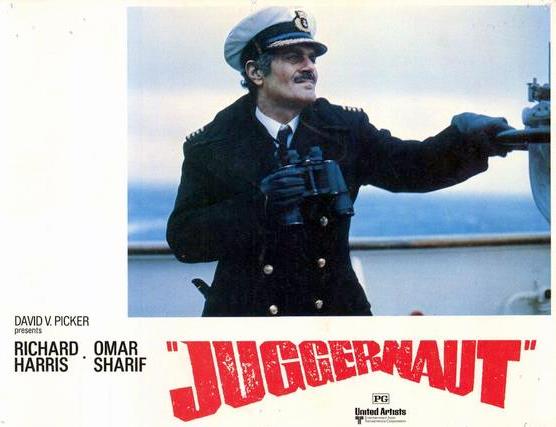
 The captain of the ship is played by Omar Sharif, looking rather dapper in his brass-buttoned uniform and matching coat. He and Harris are the co-leads of the film, but only share two significant scenes with one another. (It's a sort of “lite” version of Steve McQueen and Paul Newman from Inferno.) Harris is the more showy of the two, without question, but Sharif's deliberate underplaying makes for a nice contrast between the men.

 On dry land is Scotland Yard inspector Anthony Hopkins, desperately trying to snake out who the threatening caller is and prevent him from collecting his money while hoping he can also force him to reveal the key to stopping the impending explosions. In a bit of contrivance, Hopkins wife (Caroline Mortimer) and their two snot-nosed kids are on board The Brittanic, headed for the U.S. for a visit with her sister. Thus, his interest in the case transcends the normal level of concern.

 The CEO of the cruise line is played by Ian Holm who wants to pay the ransom and save the 1200 passengers and crew who are sailing on his ship. He is pressured by government agents to forgo that plan and not give in to terrorist threats. His harried day begins with trying to feed his own two kids and a dog (presumably he's divorced?), but that's only the beginning of his troubles! Julian Glover is a naval officer who helps to coordinate the communication between land and sea and work out the logistics of the bombs on a chalk board.
 Back on board the ship, we have Miss Shirley Knight as a jaded passenger who is married to an absent husband, but is also seeing a couple of men on the side, one of whom happens to be the captain! She strives to hold his attention, unaware that he is facing one of the primary hurdles of his seafaring career. Then there is Clifton James as a perceptive passenger and Roy Kinnear as a bumbling, relentlessly cheerful, though mostly unsuccessful, activities director.

 While the authorities on land do whatever they can to locate Juggernaut and thwart him, the team led by Harris flies out into the North Atlantic and parachutes into the water near the ship. The weather is so rough and the ocean so turbulent that the mere act of getting from the water up onto the ship is a deadly feat in itself. Meanwhile, most of the passengers are seasick from the endless careening of the boat. They feel awful before they even
 learn that their lives are in danger.
Hopkins and his men interview various suspects who may be Juggernaut (two of which are played by stellar character actors Cyril Cusack and Michael Hordern in unbilled cameos), running up against dead ends as the clock ticks on.
The passengers are informed of the bomb threat and yet have little choice but to proceed with the scheduled “fancy dress” ball, though none of them is in the mood to party. Kinnear tries to raise everyone's spirits, to little avail. Here, we are treated to some particularly  ugly clothing on the cast. The '70s were a dubious time for fashion anyway, but the costumer here managed to find a horrifically ugly and unflattering dress for Knight, a white thing riddled with big holes. As Edith Head had been nominated for her Airport costumes and would be again for Airport '77 and Irwin Allen's resident designer Paul Zastupnevich scored three of his own nominations (for The Poseidon Adventure, The Swarm and When Time Ran Out...), this is yet another way in which this disaster movie differs from the leaders of the pack.
Eventually, the threat of Juggernaut's bombs become a reality and explosions occur and some lives are lost, though it is not on the level of spectacle that one might expect. (One explosion includes the unbelievable horror of... having the sprinkler system go off.....) The real draw here is the nail-biting suspense that comes from watching Harris try to take apart one of the bomber's creations. This and the pleasure of watching a truly solid cast at work is what helps make up for some of the lack of familiar disaster elements.
 Juggernaut was directed by Richard Lester, a very unique talent who had helmed the seminal '60s film Petulia (which featured Knight in a supporting role.) After enjoying success in the early to mid '60s, the 1969 flop The Bed Sitting Room brought his career to a screeching halt. His next film, 1973's The Three Musketeers, made him a viable option within the industry again. This movie came right on the heels of that success and he continued to work steadily, a major success being Superman in 1978, until the late '80s.
One of Lester's motifs, which he uses plentifully here, is the sound of background characters talking, often saying amusing things. For Juggernaut,  it helps to either be British or have an ear for dialect in order to pick them up properly. There are some effectively dismal shipboard announcements made over the loudspeaker prior to the revelation of the emergency. His direction is skillful and solid, though he makes no effort (quite the opposite, in fact) to present the cruise liner as anything but a dreary, routine, unexciting experience.
Extras for the film were composed of folks willing to take a true and real sea voyage on an old German liner that had been sold to the Soviet Union,  but was first leased to the filmmakers. The vessel was then launched into the ocean in search of as bad of weather as could be found in order to meet the needs of the script. Thus, some of the seasickness and general displeasure amongst the passengers might not have required much acting! This is not The Love Boat. Where some other films of the genre (The Poseidon Adventure, for example) might have used miniatures in addition to location shooting, Juggernaut is all done with a real ship, with everything shot right on board, lending it a significant amount of versimililtude, though also limiting the camera freedom and the ability to shoot on roomy sets.
 Lester has a perverse sense of the absurd, which is put to good use in this film and sets it apart from others in the genre. There is a striving towards the ordinary rather than the extraordinary and a welcome lack of sentimentality. There are no mushy love scenes or clinging embraces. James and his wife (played by one-time starlet and now semi-retired wife of actor Alexander Knox, Doris Nolan) have a frank chat about their relationship that is refreshingly free of the maudlin. It must be said that her wig is ghastly, though, and what about those glasses!
Harris is charismatic and strong in his role. Often, he's called upon to act by himself or to a disembodied voice on headset,  yet he maintains interest through his commitment to the duty at hand. A screen actor from the late '50s, he continued to rise from supporting roles to eventual leads (with 1963's This Sporting Life containing his first starring part, for which he earned an Oscar nomination. The statuette went to Sidney Poitier for Lilies of the Field.) Two years after Juggernaut, he made another disaster film, The Cassandra Crossing, as well as that disaster of a film Orca. His last hurrah as a lead was probably 1990's The Field, for which he earned a second Oscar nomination (losing to Jeremy Irons in Reversal of Fortune), after which he segued back into colorful supporting roles. He died in 2002 at the age of seventy-two from Hodgkin's disease.

 Egyptian actor Sharif, after making quite a few movies in his homeland, made an international splash with a role in Lawrence of Arabia in 1962. He was nominated for an Oscar as Best Supporting Actor, losing to Ed Begley in Sweet Bird of Youth. He then made several epics such as The Fall of the Roman Empire (1964) and Genghis Khan (1965.) 1965 also brought him his most famous role (and one of his own least affectionately remembered) as Doctor Zhivago. He continued to star in a variety of movies and continued to take supporting parts until 2009. He is still with us today at age seventy-nine. This marked the only time he and Richard Harris worked together on screen.
 At the time of Juggernaut, Hopkins had only been a movie actor for about seven years.
  His first role of note was as one of Peter O'Toole and Katharine Hepburn's sons in The Lion in Winter (in which his love interest was Timothy Dalton!) A reliable supporting actor, he didn't emerge as a leading man until 1978's Magic, opposite Ann-Margret. Around 1990, he had something of an epiphany which gave him extraordinary insight into the craft of acting and opened up a new realm of possibilities for him. He took great advantage of this, first with the unforgettable part of Hannibal Lecter in Silence of the Lambs (for which he won an Oscar) and then with Remains of the Day, Nixon and others. Now seventy-three, he is as busy or busier than ever.
 Hemmings started out in films as a youth in 1954. By the time of Blow-Up in 1966, he'd become an internationally known presence in new age cinema. The following year, he played Harris' illegitimate son Mordred in Camelot and in 1968 appeared in the cult classic Barbarella. As his acting career slowed, he took to directing, surprisingly enough, he did several episodes of Magnum, P.I. and quite a few of The A-Team! He died of a heart attack in 2003 at the age of sixty-two.
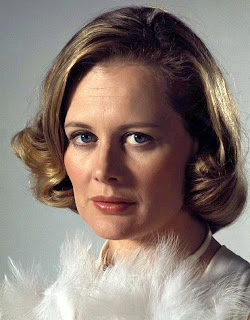 Knight started out as a Warner Brothers contract player, kept busy in many TV series and movies. She was nominated twice for Supporting Actress Oscars with The Dark at the Top of the Stairs in 1960 (the award went to Shirley Jones in Elmer Gantry) and Sweet Bird of Youth in 1962 (losing to Patty Duke in The Miracle Worker.) Never one afraid of controversial roles, she tended to avoid the routine, perhaps at the expense of a career as a leading actress. By the time of Juggernaut, she was in a bit of a film career lull. She, in fact, didn't make another movie until the disaster-at-sea fiasco Beyond the Poseidon Adventure in 1978, in which she was one of the few saving graces.
  Though there are occasions in Juggernaut where she looks quite pretty, there are others when she's less so. She sports what might be one of the all-time ugliest pair of eyeglasses in one scene! In time, the weight came on, but she began to enjoy a healthy career as a valuable character actress. Now seventy-five, she works constantly in small roles in films of every type.
 5' 6” Holm managed to pack a lot of punch into his diminutive frame. Active on British TV since the late '50s, he began to land decent supporting roles in films during the late '60s. In 1979, he had a memorable appearance in Alien and in 1981 was Oscar nominated in the Supporting Actor category for his work in Best Picture winner Chariots of Fire (John Gielgud won that year for Arthur.) In recent years, he put his size to good use as Hobbit Bilbo Baggins in two Lord of the Rings films as well as an upcoming set of films based on The Hobbit. He is eighty years-old as of this writing.
James is a New York City native, but made something  of a specialty out of playing good ol' southern boy types in Cool Hand Luke (1967), Live and Let Die (1973), The Man with the Golden Gun (1974) and Silver Steak (1976), often playing a sheriff. John Sayles used him in Eight Men Out (1988), Lone Star (1996) and Sunshine State (2002.) His most recent film appearance came in the 2006 comedy Raising Flagg with Alan Arkin. He is ninety years-old at present!
Kinnear was a longtime favorite of Lester and he cast him in seven different films  (eight if you count The Four Musketeers, the second part of The Three Musketeers that was lopped off and released as a sequel.) Positively perfect at playing endearing, affable, but utterly hapless types, he was busy from the early '60s on. When Lester went back to the well once more (for the ill-advised The Return of the Musketeers, released in 1989), he naturally cast Kinnear again, but, sadly, an on-set accident (a fall from a horse) led to his demise. He was dead in 1988 at only the age of fifty-four. The movie (which never even received a theatrical release in America) was dedicated to him.
Mortimer, who spends the bulk of her time on screen either wrangling her two unruly kids or wretching  from motion sickness, had an active career in British movies and on TV from the early '60s through the late '80s, with only sporadic appearances since then. There's an awfully prominent mole or wart above her right eye in Juggernaut that becomes a bit of a distraction! One of her credits is the infamously bad 1968 film A Place for Lovers, that starred Faye Dunaway and Marcello Mastroianni. She is sixty-nine years of age now. The kids, by the way, were real-life sibling, who, with their other two sisters enjoyed a spate of acting projects during the mid-'70s before retiring.
Keen-eyed viewers will also spot star-to-be Simon MacCorkindale in his film debut as a helmsman on the bridge of the ship.  His wordless role is listed in the credits, so perhaps he had lines initially that didn't wind up in the final cut of the film. His next film (also set on a boat), 1978's Death on the Nile, would give him a far more prominent part. Later, he had a featured role in Jaws 3-D and worked a lot on American television. Sadly, he passed away last year at only fifty-eight years of age due to bowel and lung cancer. (Did you ever notice how my cast wrap-ups, especially of older films, tend to be all “she died” or “he was killed”?? It's depressing sometimes, I tell ya!)
So long as one doesn't go into Juggernaut expecting the usual glossy, slick disaster movie, it ought to prove quite entertaining. The subversive approach to the material from Lester and the at times taut suspense give it some distinction. I recall seeing it on TV many years ago and hating it, but in more recent years I've come to appreciate what it has to offer.

 Called Hollywood Studio Magazine, it was a black and white monthly, with a color front and back cover, that contained articles on classic stars, plenty of vintage still photos and the occasional nod to the stars and happenings of the present day. Most interesting to me was the information on events that were heavily attended by older stars who, by then, were not making the rounds too much at occasions covered by the more prominent mainstream press. (In order to enlarge these to full size, you will have to click on them, then - if they go into that new photo viewer, which limits the size - click on "Show Original" and the pages will open in a larger size in a new window. Sorry, but that's the way Blogger is these days...)
 tragic deaths of William Holden and Natalie Wood (oddly enough, the former longtime companion and wife, respectively, of (still airing) Hart to Hart co-stars Stefanie Powers and Robert Wagner.) Along with the articles, there are collections of photos from their lengthy careers. Looking at the shot of Holden from Golden Boy, his debut, you can really see how quickly he aged in the years beyond that (from a combination of sun, booze and cigarettes), though he still remained handsome for several years afterwards. Though the magazine relied heavily on still photos, an occasional rare shot like the one with him and George Brent occasionally saw print.
 You know that if I'm going to scan anything, I'm going to scan the male shirtless shots! Thus, in the Natalie Wood retrospective, we have both Jeffrey Hunter and William Devane (from the TV miniseries From Here to Eternity) on display. The attendant articles don't shed any remarkable light on either death, but there are plenty of tributes to both stars from people they worked with. Interestingly, recovering alcoholic Dana Andrews is quoted as saying the the media was correct in emphasizing the presence of alcohol in both deaths as it inevitably contributed to them.
 the great era of Hollywood gossip columnists and reporters had faded (soon to be replaced by a set of tabloid journalists who saw print in various products like The National Enquirer and Star Magazine.) HSM gave Graham a home base from which to continue printing updates on the stars from his era. Check out the descriptive way he profiles Liberace in this edition of the column.
 Lee Graham himself appears far right in the photo with Mickey, Mickey's wife Jan (to whom he remains wed still today!) and others.
 Then we have an article by the number one “fan/friend” of Miss Ann Miller. The devotee fell in (platonic??) love with her as a child, watching her films at a neighborhood theater, and began collecting photos and other memorabilia concerning her from then on. Having inspired him to become a dancer in his own right, he later met up with her and they formed a friendly relationship (she being impressed by the gargantuan assemblage of items he had collected over the years and brought to share with her at a rehearsal space.)
 but my favorite is the one of her with Edith Head because it was taken at a time when you tended to see less of her. She had a fairly dormant period after her days in those classic musicals before swinging back into the spotlight with Broadway's Sugar Babies. I've always been fond of Ann Miller, but after seeing her on a TCM Private Screenings one-on-one with Robert Osborne, I started to appreciate her even more. Below is a link that has become something of a recent obsession of mine. The whole thing is a bizarre scream, but at the 9:15 mark, I always develop an ear-to-ear grin and proceed to sing that song for hours afterward.
 The back cover has an ad/offer for a personally signed print featuring the career of Mr. Burt Reynolds. Am I crazy for thinking that $100 in 1982 currency was more than a bit steep for this?! Perhaps they are hard to find and have retained their value, but I'm a tad doubtful... Of seemingly greater value are the ones shown below of stars from an earlier era such as Mae West, Ray Bolger and many others.
 It features Robert Wagner (with Natalie Wood) on the cover, billing him as "TV's Classiest Actor." An article inside relates the way his persona recalls the glamorous and debonair qualities of the golden age of Hollywood and describes how he is continuing to work through the death of Wood along with their children (and with the aid of constant companion Jill St. John.) His charity work with The American Heart Association is also revealed.
 This issue's Man About Town article depicts a variety of stars attending an event honoring Danny Thomas for his work with St. Jude Children's Research Hospital. There is mention in the text of Erik Estrada and his "fiancee" Kathy Showers (no wedding ever took place.) Also reported is Dorothy Lamour's recent cabaret act along with a shot of her getting a smooch from attendee Robert Mitchum.
 Rock Hudson, one of the the most prominent celebrities to be claimed by AIDS, didn't die from it until 1985, after which it seemed to become far more heavily reported upon and discussed. Even amfAR wasn't founded until 1985, having been formed by two separate organizations on opposite coasts, one of which started up in 1983. So it's remarkable and satisfying to see that efforts were being made earlier and by less-publicized celebrities. Patti Page and Adele Jergens (one of the ladies shown recently in my Halloween post of cheesecake photos) are among those pictured.
 Brick was played by the less-famous actor James Morrison who has nonetheless carved out a lengthy and enduring career as a character actor, best known probably for his recurring role on 24 over the course of several seasons. This is him then and now.
 .
.
 The bulk of my scans come from the third issue I picked up, from early 1985. The cover shot is of Clark Gable and Vivien Leigh from Gone with the Wind. You know, I've seen GWTW countless times, but I have no memory of the outfit Scarlett is wearing here! Did she really appear in this in the final cut and, if so, how did I miss that mammoth brooch at her neck?

 This time, in addition to his Man About Town column, Lee Graham reports on the recent second annual American Cinema Awards (I've never even heard of them! Are they still given out or did they go the way of the recent TVLand Awards...) The event honored my kind of stars: Dorothy McGuire, Robert Mitchum, Robert Preston and Jane Wyman. You can keep your Mira Sorvinos and Cuba Gooding Juniors!
 And what about gay favorite Guy Madison, older. but still quite handsome. (He would have been about sixty-three here.) The second page offers up even more old stars, including John Payne (who would have been around seventy-three here!), Ruby Keeler, Virginia Mayo and Rock Hudson (who, if you'll recall, would soon be passing away...) But who was it who threw together this tribute to the olden days? That I will not reveal, but will let you discover when you click on the article and read the final sentence! Let's just say he was a man good at bringing the near-dormant back to life!
 There's a two-page article on ill-fated hunk Jon-Erik Hexum (who is profiled here at The Underworld.) The piece is written by a man described as a writer-photographer, but who is revealed within the text to be more of a costumer/wardrobe man. I have no idea what went on between the two, but if you read the article it is more than clear that Brian had - at minimum - an attraction for Hexum.
  Whether it was ever reciprocated I don't know and probably never will. However, as the man in charge of dressing Hexum on Voyagers and then Cover-Up, he may very well have had one of the greatest jobs in the history of show business!

 The cover of the magazine promises a Gone with the Wind centerfold poster. This is fortunately still there, intact, though it's nothing to shoot the cat over. It doesn't even include Miss Olivia "Melanie" de Havilland at all! Nonetheless, not wanting to disappoint my readers, I have scanned it and soldered it together for you.
 Douglas McClelland, the author mentioned above, also provided a review of the recently released compilation film That's Dancing!, a Terpsichorean documentary made to cash in on the success of the prior That's Entertainment and That's Entertainment Part II. He bemoans the pedestrian nature of the project and the lack of Rita Hayworth and Betty Grable while wishing there had been more of Dan Dailey as well.
 In what seemed to be a recurring facet of Hollywood Studio Magazine, there was a personal recollection of another star by a lesser-known person who worked with him. Fledgling English actor Patrick Brock relates his experiences working with legendary swashbuckler and lady-killer Errol Flynn towards the end of his life.
 (for In Old Chicago, 1937) whose career was cut short by illness. A few years ago, thanks to an Internet blind item, a rumor spread like wildfire that Alice Brady was actually a man posing as a woman! Her early life is fairly well documented, so this is virtually disproven, if it ever even needed to be. (Never mind the fact that she gave birth to a son in the early 1920s!)
 one of the two sexiest stars working at the time (the other being Mel Gibson!)
 This magazine was edited, for at least a significant part of its existence, by Joan Evans Weatherly. Evans was the daughter of Hollywood writers Dale Eunson and Katherine Albert. They were close friends of Joan Crawford, for whom Evans was named and whose godmother of Evans she was. Signed to a contract with Samuel Goldwyn at the impossibly young age of fourteen (but augmented to sixteen by her mother in an attempt to diffuse the way such a fact appeared), she was featured as the title character in her very first movie, Roseanna McCoy, opposite Farley Granger. It was a love story based on the Hatfield and McCoy feuds of Appalachia.
 Within a couple of years, at the age of seventeen, Evans made up her mind to marry a car salesman she loved, but her parents were aghast at the idea. They asked Evans' godmother and mentor Crawford to “talk some sense into her” and squelch the idea. For whatever reason, Crawford supported the union and instead held a wedding at her home for the couple, completely circumventing Eunson and Albert's wishes (not even inviting them!) Albert never again spoke to Crawford and Eunson, author of The Star, was suspected of lacing that screenplay with unflattering attributes that mirrored Crawford's ways.
 The laugh was on them, though, because not only did the marriage last beyond the demise of everyone else involved and result in two children, but Evans and her husband Kirby Weatherly remain wed to this day, nearly 60 years later! They now reside in Nevada. Crawford must have somehow sensed, despite her own rocky choices when it came to romance, that this was the real deal!