When they talk about the most beautiful actresses who ever lived, often the same names come up: Elizabeth Taylor, Sophia Loren, Audrey Hepburn, to name a few. There really is no such thing as “the most beautiful actress,” at least as a statement of fact, because people have their own tastes, perceptions and standards. Nevertheless,  another one who pops up frequently on such lists is Miss Ava Gardner.
Gardner was born a simple “country girl” in 1922 in Brogton, North Carolina, though the town was nicknamed by the locals as “Grabtown” and she always referred to it as such. The youngest of seven children, she was raised for her first dozen or so years on a farm and was frequently barefoot. She later lived in Newport News, Virginia and then in Wilson, North Carolina as her family’s fortunes dipped. Her father died when she was fifteen and her mother worked in a succession of boarding houses.
Ava (who, believe it or not, really was born with the marquee-ready name Ava Gardner) graduated high school in 1939 and followed that up with classes at a Christian college. In 1941, she visited her sister and brother-in-law in New York City and agreed to pose for a photo for him to aid his burgeoning career as a portrait photographer.  When her picture in the storefront window caused a stir, including the interest of a local movie theater owner, her sister and her husband took the theater owner’s advice to heart and sent a copy of the portrait to MGM. Amazingly, this gambit won her an interview at MGM’s New York office and she was offered a contract and shipped off to Hollywood!
The studio wasted no time in eliminating her southern drawl, which baffled both the New York and California representatives. Her looks, however, were too stunning to ignore. The down home girl was given a makeover that would  have her not only able to portray royalty and nobility on the screen, but also provide her with a sexy style that would have men’s jaws dropping for several decades. Though she would toil away in bits of junk for several years, by 1946, her career hopped into higher gear (when she was loaned out to Universal for The Killers, Burt Lancaster’s film debut.) From then on she was a sought after leading lady, starring opposite many of the biggest actors of her day. In 1948, she played the title goddess in One Touch of Venus and no one was arguing!
Back to the beauty issue… I like ruins. I find them affecting and infinitely more interesting than new buildings.  Maybe that’s why I always tend to be drawn more to actresses who are on the decline rather than ones who are in their prime. Thus, my favorite Ava Gardner performances are the ones she did after her (admittedly stunning) beautiful period. Even in her prime, she had evidence of puffiness under her eyes, a genetic trait, that was carefully eliminated in most movies and photos. (Click to enlarge this photo to the left.) As she aged, thanks to plenty of smoking, drinking and late nights, this feature would stand out more, but she never lost that dazzling sparkle that made her so arresting to watch.

 Perhaps the peak of Ava’s career was 1953 when she played Guinevere in Knights of the Round Table, made a sparkling cameo as herself in The Band Wagon and, most importantly of all, nabbed her first and only Oscar nomination as Best Actress for her work opposite Clark Gable in Mogambo. She didn’t win (Audrey Hepburn won that year for Roman Holiday), but it marked her resume with some legitimacy, something she craved and yet felt she never once attained. (She was wrong.)
The next year, what many consider her signature role, The Barefoot Contessa, came along, the part of a simple girl being remodeled into an international acting sensation coming close to the truth of her own existence (though the character was Spanish.) Gardner was frequently cast as ladies of foreign nationality. She had no confidence in herself as an actress and, yet, this North Carolina native came off plausibly over the years as a half-caste Indian (as in the photo above right with Bill Travers from Bhowani Junction), a mulatto, a senorita or two, a Russian Countess, an Austrian queen and many other exotic parts.
 Somewhere along the line, someone rightly decided that Gardner looked good in hats and so many of her films began showing her off in sometimes elaborate and sometimes simple creations that went beautifully with her oval face and sensual eyes with their almost impossible amount of eyelid space. For most women in the 1970s, hats were out, but Gardner appeared in either a hat or some other headgear in just about every one of her movies from that decade and not only didn’t look like an anachronism, but also looked damned good and probably led a lot of lesser women to the milliner, thinking that they could pull the looks off.
The British were far more appreciative of what Miss Gardner had to offer than the U.S. Academy was. She received three Best (Foreign) Actress nods from them for 1956’s  Bhowani Junction, 1959’s On the Beach and 1964’s Night of the Iguana. Apart from a Golden Globe nom for the last film, she was given no significant recognition in America for her work in these or any other of her films. The thing is, in many cases she was the best thing about a movie and sometimes the reason that anyone went to see it in the first place! She left Hollywood in 1958 after years of servitude at MGM and scarcely came back, but her name retained a certain amount of drawing power for quite a few years after.
 When she did 55 Days at Peking in 1963 with Charlton Heston, the sparks flew and not in a good way. He was exasperated (as he often was during his early career) with her delays and breaks in order to beautify and maintain that beauty as the day wore on. This photo of them smiling together demonstrates tremendous acting ability on both their parts! Years of being sold like meat by Louis B. Mayer while he reaped a lot of the reward along with having her various attempts at expanding herself be stomped out (such as when she was forbad from singing her own songs in Show Boat) had given her a rebellious attitude and a disregard for overbearing structure.
She would do practically  anything for her pal John Huston, however, and gave him no trouble on Iguana. The potentially combustible combination of Huston, Gardner, Richard Burton and his wife Elizabeth Taylor (not in the film, but along for the ride), Sue Lyon as well as others in the cast, had its fair share of fireworks here and there, but Gardner threw herself into the earthy part of sexually aware hacienda owner Maxine and let go of most, if not all, of her vanity, even drawing lines under her eyes and obscuring her figure to look further "past it." The part had been originated on stage by Bette Davis, after all, who was fourteen years her senior.
Her next job for Huston, however, was a far less pleasant or rewarding experience. Huston had decided to tackle The Bible and amassed a rondelet of stars to act out the good book. However, he only got through a small portion of the mammoth tome and so the film was re-titled The Bible: In the Beginning… She was cast as Sarah, barren wife of Abraham (George C. Scott) and was done up in heavy eye-makeup (which I couldn’t possibly love any more) and filmy robes and veils (ditto!)
She and Scott (who went from Jekyll to Hyde when drunk) had a raucous, violent, abusive affair that caused a lot of problems for everyone involved (or nearby!) She sometimes had to be photographed in dim light in an attempt to cover the bruises from Scott that  makeup didn’t fully obscure. For her trouble, she wound up in a bloated, dull flop and kicked Huston all throughout the premiere, muttering, “Christ, How could you let me do it?!” and other insults as the cinematic turd continued to unfold. Critic Bosley Crowther accused her of looking as if she were "posing for a monument." But what a monument!
As she aged, Ava, who had always had a potty mouth and a wicked sense of humor, began to develop an even more caustic wit and was increasingly less guarded with her remarks (thank God!) Her ex-husband Frank Sinatra married the waif-ish, closely cropped Mia Farrow and Gardner cracked, “I always knew Frank would end up in bed with a boy.” She took to calling everyone “honey” or “baby” and inserting that term of endearment before or after one of her delicious verbal bombs.
She lived for a long time in Spain, developing a taste for bullfighters, and then in London, only making sporadic returns to Hollywood and the rest of the U.S. (usually in order to make a little more dough to keep her comfortable financially.) In 1968, in her first appearance since The Bible, she took on what I consider to be her all-time most glamorous role. She portrayed Austrian Empress Elizabeth (beloved in real life by all her subjects and known as “Sisi”), the mother of Crown Prince Rudolf (Omar Sharif) in Mayerling. Based on fact, the story concerned Sharif and his young lover Catherine Deneuve and their tragic end, but whenever Ava appears, everyone else is wiped from the screen (in what is, at times, a very dull film.)
Empress Sisi was renowned for her long, lustrous, decorated hair and the stylists for Mayerling kicked things up even higher than they were for the real woman. Gardner sports so many long curls it’s a wonder she could even hold her head up at night! There just isn’t any way that she could look more glamorous and these photos don’t do her justice. Incidentally, Gardner was only ten years older than Sharif when she played his mother, but somehow they pull it off.
 Gardner has to have set some sort of record for having worked as an actress for forty years and almost never played a mom! A review of her filmography shows an almost unbelievable lack of parts that gave her children in them. She didn’t have any kids in real life (but did abort two pregnancies with Frank Sinatra), which may have been one reason she wasn’t the go-to girl for parent roles the way some other actresses were.
Roddy McDowall, a longtime, close friend, cast her in his only directorial effort, 1970’s Tam-Lin (also known as The Devil’s Widow), a moody thriller about a woman who uses witchcraft to manipulate the people around her and suck the life out of them. Mismarketed by its distributor/owner American International and cut in a way that differed from his intentions, the film had a torturous path to and from the cinema, though there has been a re-edit done on it to return it to the way McDowall wanted.
Now appearing even more sporadically, she agreed to a cameo for her buddy John Huston in The Life and Times of Judge Roy Bean in 1972, playing famed actress Lillie Langtry, the object of the title character’s obsession. Two years later, longing for a dose of California sunshine and eager to pick up some ready cash, she would come from London to Hollywood to make the movie that first introduced her to me, a saucer-eyed child, sitting agog at the spectacle of not only a decimated Los Angeles, but of a bitchy, bedraggled Ava Gardner.
Earthquake reunited Ava with her old sparring partner Chuck Heston from the highly troubled 55 Days at Peking. This time, though,  the pair got along quite well. Heston had relaxed his stringent ideas about punctuality (or at least grew to appreciate that women need more time to get ready than men) and Gardner no longer felt the need to primp (especially when a lot of her time was spent covered in grime and wallowing around on the ground.) He was especially proud of her, as was practically everyone on the set, when she performed some of her own stunt sequences, including a treacherous one involving water.
 It’s one of those ironies that during Peking, the two had to act in love, even though they didn’t get along. Here, they had to enact hatred even though they were now friendly! In the theatrical cut of the film (not the extended – and awful – TV version), Gardner gets to say the first line, “GODDAMMIT!!” to a sweaty Heston who is in mid workout. Their snotty repartee is one of those hilarious tête-à-tête moments that
  I recite aloud on long car trips to amuse myself.
Critics at the time (and some now) remarked on how bad Gardner looked with her tousled wig and floppy nightgown. Yeah, she’s older and all, but in the first place, she was playing a disheveled, suicidal alcoholic who is eventually caught in a cataclysmic earthquake! She does clean up a bit for a quick phone call to her father and then dons a hat and cream-colored suit in order to meet him for lunch. Afterwards, she and Heston have another fun exchange of vitriol inside an elevator in which she blasts him right and left over his affection for another woman. In better days, someone would have taken pains to see that she and Heston were on the same plane of vision. Perhaps she’d have been placed on an unseen platform or filmed in a way that gave them slightly more equal footing. In this case, she is stuck in the corner of an elevator, looking hilariously diminutive, with Chuck in the foreground, and she all but disappears except for her face! They may as well have had Estelle Getty perform this segment.
As I said, this was my first exposure to Ava and I was totally captivated. She (along with Stella Stevens from The Poseidon Adventure and Lee Grant from Airport ’77) taught me how to cuss and how to effectively take the Lord’s name in vain. She’s second-billed, but only in the film for about twelve to fifteen minutes total. Every frame that she appears in is screen magic to me, but probably my favorite moment is when she is desperately awaiting the fate of her father and tries to ask a dazed, shock-ridden secretary if he is all right. Some blessed soul loaded this moment onto youtube.com and I encourage you to watch it and be tickled by the hysterical intensity of her performance and the pronunciation (blended from a mixture of North Carolina, Hollywood tutors, Spain and London!) given to her line readings!
http://www.youtube.com/watch?v=H_i7WNmfwRo
in vain. She’s second-billed, but only in the film for about twelve to fifteen minutes total. Every frame that she appears in is screen magic to me, but probably my favorite moment is when she is desperately awaiting the fate of her father and tries to ask a dazed, shock-ridden secretary if he is all right. Some blessed soul loaded this moment onto youtube.com and I encourage you to watch it and be tickled by the hysterical intensity of her performance and the pronunciation (blended from a mixture of North Carolina, Hollywood tutors, Spain and London!) given to her line readings!
http://www.youtube.com/watch?v=H_i7WNmfwRo
 The next year she was paired with Dirk Bogarde (and in the posters received the same billing that Steve McQueen and Paul Newman had shared in The Towering Inferno, with Bogarde at the lower left and she in the upper right!) in Permission to Kill. The two had previously costarred in 1960’s The Angel Wore Red, in which she had been top-billed. Again outfitted in a stylish hat for part of the time, once she takes it off, a person flipping channels could be forgiven for thinking they’d stumbled on a second, lost Dirk Bogarde-Judy Garland movie!
1976 brought The Cassandra Crossing,  a murky, but entertaining suspense film set on a plague-ridden train that is headed for a severely weakened bridge. (See individual post for that film by clicking on it in the column to the right.) Her character is a wealthy, sarcastic lady, always done up in expensive ensembles and jewelry, who is traveling with her yonger plaything Martin Sheen. Nothing that Gardner says or does after her opening scenes has any bearing on reality, but it scarcely matters because she is deliciously mouthy throughout and adds a lot of much-needed spice to the proceedings.
 That same year saw the release of one of director George Cukor’s all-time debacles, the U.S.-Soviet co-production of The Blue Bird, a ghastly children’s musical with a cast that included such superstars of song as Elizabeth Taylor, Cicely Tyson and Jane Fonda!! Gardner played Luxury and was outfitted with an ornate headpiece. Filmed in the exceedingly uncomfortable conditions within the U.S.S.R., no one was happy or particularly healthy during the shooting of it and the end result was a gigantic flop.
The Sentinel was a 1977 horror film that was positively jam-packed with name actors. Nominally starring the somnambulistic Christina Raines along with Chris Sarandon, they are hardly the main attraction. Watching it now is a hoot because of seeing people like Jeff Goldblum, Jerry Orbach, Christopher Walken,  Tom Beringer and Beverly D’Angelo before they had reached their full measure of fame. However, there are also old guards on hand such as Martin Balsam, Jose Ferrer, Burgess Meredith, Arthur Kennedy, John Carradine, Eli Wallach, Sylvia Miles and our Ava.
She plays a chic New York City real estate agent who rents part of an ancient brownstone to Raines. First seen with her hair pulled back and augmented with a faux knot, she then sports a flattering hat with a band on it to coordinate with the scarf at her neck. She chews on her lines with a vague sense of menace, mixing charm with some degree of mystery. It’s a joy to see and hear her showing off the apartment with her patented brand of voice and movement (something no imitator has ever been able to do well, despite the varied attempts!)
 She was 55 at this point and had some wrinkles here and there, but was still able to withstand a massive close-up on the big screen. This shot of her is not cropped from a larger image. This is the way the frame delivered her at one point, up close and personal and I think she looks quite radiant, despite the angle and all things considered! She has a sort of vague Gina Gershon thing happening here in a way, don’t you think?
 It’s likely that she only
  worked a day or two on the film, for her second scene has her in a different outfit, but with the same hat on, this time with a plain black band on it. Obsessive observer that I am, I noticed that in the first scene, in the cream suit, she had some fine hair sticking out from the back of her hat. In the second scene, though the outfit is different and presumably a different day, the hair is still there.
Gardner was off the screen for two years after this and made her return in one of the lesser disaster features ever made, the Canadian tax write off City on Fire, a cobbled together, derivative movie that somehow managed to wrangle together a plethora of name brand actors who were (apparently) in significant career or financial trauma. She played an alcoholic newscaster who delivers numbingly dispassionate reports on a series of fiery explosions. Most of the time, she looks pretty rough in this, but I must say I like her hair in this shot, a soft departure from the full, curly style and/or the taut, pulled back look she had been more often sporting.
Ava made three more films after this one, The Kidnapping of the President, Priest of Love and Regina Roma. The first lulu had her playing a shrewy, conniving wife to Van Johnson’s worried 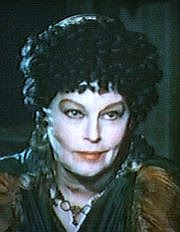 Vice President! In 1985, however, she made her TV debut (this being apart from appearances on talk and game shows) and did a string of projects in a row. First was A.D., a five-part miniseries chronicling Christians in the wake of Jesus’ crucifixion. She got to play a lascivious Roman lady named Agrippina, practically in clown-face, powdery makeup. This was followed by a supporting role in a remake of The Long, Hot Summer (playing the part Angela Lansbury originated in the 1958 feature film.)
Next up was a bit of a surprise. She took a six-episode role on the hit primetime soap opera  Knots Landing! Now, if Ava had been a guest star on Dynasty, you can bet your ass she’d have been given a dramatic entrance with hats, furs, diamonds, luggage… the works, though her role surely would have been shallow and silly in the end since Dynasty focused more on the surface than anything. Here, she was still afforded a modicum of awe and prestige, but on a far smaller scale. She played the estranged mother of Greg Sumner (played by William Devane.)
 The publicity photos sent out by CBS appear to have been carefully airbrushed to suggest someone a little more smooth and taut than the actress was by then, but she nevertheless managed to delight viewers with her fairly brief turn on the show. As expected, her blunt persona held up nicely against the TV son who was known for being a jerk to people and refusing to conform to other peoples’ standards. Devane’s father, by the way, was played by another movie veteran, Howard Duff, who had once been Ava's lover for a while several decades prior.
The final two roles that Gardner portrayed were in a comedy-mystery pilot called Maggie,  in which she played Stefanie Powers’ mother and Harem, a two-part TV movie about Nancy Travis being abducted and forcibly placed into the title grouping. Here, Gardner played the chief wife of a sultan who was enacted by none other than her old Mayerling son, Omar Sharif! Travis stirs up jealously in Gardner and has to endure the consequences. This marked the final time that Gardner performed before a camera.
Miss Gardner, a lifetime heavy smoker, suffered from emphysema and had two strokes in 1986. As lacking in vanity as she was, the partial paralysis she was left with after this turned her into somewhat of a recluse and she rarely left her London apartment except to walk her pet corgi Morgan, a live-in maid being her other, constant companion. Her ex-husband Sinatra arranged a private plane with medical staff and an appointment with a specialist in the U.S., though he did this more as a favor than out of a financial necessity. (Gardner had spent much of her downtime writing an autobiography, which was a success, though she didn’t get to enjoy it, perishing before it was fully completed.)
She died of bronchial pneumonia in 1990 at the age of 67. She died way too early, but no one can say she didn’t live! She was one of Hollywood’s most glittering stars and had a heady enough existence then, but as soon as her contract with MGM was up, she lived the rest of her life on her terms, even if that meant not working unless she felt like it or needed to in order to feather her nest. When she did work, she made it a habit to give her all to whoever was directing, no matter the material they were working on.
What’s sad is that she never realized what a massive impact she had on people, nor did she recognize  her own level of acting talent. Interviewed late in life, she said that she “never did anything to be proud of.” While I am certainly not focusing on her best work today, I vociferously beg to differ with her! Another quote was, “Christ, what did I ever do worth talking about? Every time I tried to act, they stepped on me. That's why it's such a goddamn shame, I've been a movie star for twenty-five years and I've got nothing, nothing, to show for it.” Again, I think most people would disagree. I know I miss her breathy, slinky voice and her amazing face all the time. No one today comes close and no one ever could!
 Proudly taking its place next to Can't Stop the Music, Xanadu, Sgt. Pepper's Lonely Hearts Club Band and other breathtakingly bad musicals of the same basic era is this rapturously awful piece of celluloid punishment. This one tops all of the aforementioned flicks in the heinousness department because the others, at least, contain some modicum of memorable and, even good, music! You might find yourself remembering a song or two from The Apple, but it will likely be for the wrong reason. The “styling” in this film is also in a category all its own (notice I didn’t say class!) The word for it is putrescent.
 Released in 1980, this film is set in the far-flung future of 1994. Shoulder pads, face and hair paint and garish, gaudy,
  shiny clothes are all the rage. (So are ridiculously appointed cars, full of gadgets with no apparent purpose.) Music (and apparently most everything else!) is controlled by a huge conglomerate called BIM, run by a demonic looking, all-powerful executive. During a Worldvision Song Festival, Catherine Mary Stewart and George Gilmour, two young, folksy types from Moose Jaw, Canada, completely at odds with everyone else in sight, pit their sappy
  love ballad against the over-the-top, synthetic music of Grace Kennedy and Allan Love.
Surprisingly enough, they start to endear themselves to the whacked-out audience and come close to winning the competition, but the evil head of BIM (played by Polish actor Vladek Sheybal) rigs it so that they lose. Realizing their potential, however, he attempts to sign them to a record deal. He invites them to a party at his elaborately designed  house where the chains really begin to come off in the hair, wardrobe and makeup stakes! A crazed assortment of music celebs and hangers on populate the party. (Look fast for Finola Hughes - above, middle - as one of the dancers!) Stewart is entranced by everything, but Gilmour is skeptical.
The following day, the duo reports to Sheybal’s headquarters where a plethora of musical acts are waiting for the chance to be signed. Search the world. Try it. I’ll wait. You will never see another production number as zany, ridiculous and as musically unsound as this. It’s bad enough that Sheybal speak-sings the number (and he’s no Rex Harrison!), but the song is so disjointed and bizarre that there was no chance of it being good in the first place. However, like almost everything else in this movie, it entertains nonetheless due to sheer audaciousness and lunacy.
Once inside Sheybal’s office, Stewart foolishly gives in and becomes a performer with BIM while Gilmour stands his ground. His reservations about signing are manifested in a couple of hallucinatory interludes, one involving that disaster movie era staple – an earthquake – and the other a far more elaborate and memorable one.
Suddenly, he and Stewart are  shown in pseudo Adam and Eve style getups with Sheybal (natch!) as Satan. They find themselves in a cavernous, hell-like place filled with writhing, deformed inhabitants. Love, in a gold lame thong that seems to have a hoagie bun stuffed into the front of it, prances around singing about the temptations of “the apple” while black henchman/assistant Ray Shell, in full-on, glam, snake suit hisses accordingly. The primary benefit of this senses-shattering debacle is that Gilmour spends the entire number in a very skimpy, leafy loincloth and, whatever his other faults may be, he is a cute, furry little guy.
 Once back to reality, he refuses to sign with BIM and is quickly on the skids. He returns to his seedy apartment where Miriam Margolyes plays his fretful landlady with every solitary drop of stereotypical
  Jew mama cliché that she can muster. He sees what the money, drugs and sexual excesses are doing to Stewart and attempts to break her away from BIM. When that doesn’t work, he is roughed up and left to flounder in the pouring rain (mustering up enough energy, though, to warble a love duet as the blood seeps from the corner of his mouth.)
Gilmour only wears one pair of jeans throughout
Jew mama cliché that she can muster. He sees what the money, drugs and sexual excesses are doing to Stewart and attempts to break her away from BIM. When that doesn’t work, he is roughed up and left to flounder in the pouring rain (mustering up enough energy, though, to warble a love duet as the blood seeps from the corner of his mouth.)
Gilmour only wears one pair of jeans throughout the bulk of the movie. The chances of them being any tighter are about 150,000 to one. He sports some serious moose knuckle (and, to be honest, sometimes camel toe!) any time he's shown in anything but a close-up! I feel guilty all over for looking, but that, and his hairy chest, which is frequently peeking out of his shirts that are sometimes unbuttoned to below the sternum,
  seem to steal my attention away from the never-ending parade of tacky, outrageous and deliberately garish costumes that everyone else has on. That said, most of the extras seem to also have been encouraged to "go commando" and put their junk up there on the silver screen whenever possible!
Anyway, thanks to Margolyes and her cure-all chicken soup (which is ladled into the bowl clear, but is cloudy when she feeds it to him!), he makes one more try to get to Stewart. This time, he in intercepted  by Kennedy, who takes him on a drug-laced sexual journey that includes visions of pasty pale “dancers” in gold thongs simulating positions probably not even found in The Kama Sutra while she sings, “I’m comin’, comin’ for you” in addition to other even more suggestive lyrics. When Gilmour enters the house, there are gays a’ plenty, in and out of drag. When the erotic couples are shown, naturally it’s all hetero.
Things get really loopy when Gilmour runs into bearded hobo Joss Ackland who introduces him to a 1960s hippie culture. (The largest percentage of this sect is under 40 or even younger though the movie’s timeline of 1994 would have this about three decades after the 60s. Did they all join as children?) Eventually, Stewart and Gilmour are reunited and join the hippie troupe as a God figure (also played by Ackland) confronts the Satan figure (Sheybal.) Somehow, in a year’s time, the young couple have conceived, born and raised what looks to be a three year-old child (or else the planet’s most overgrown three month-old!)
 The basic plot line of the film, which, despite all the fanciful trimmings, couldn’t be more hoary (an innocent seduced into sin by shady opportunists?) takes its basic cues from The Bible, but is souped up with Rocky Horror Show-style hair, make-up and costuming topped off with ludicrous
  production design and some of the most dreadful, ear-assaulting production numbers ever to be captured on film. Every dancer acts as if there's a $1000 prize for the most obnoxious or idiotic expression captured on film that day. In a move that could only have happened in the 80s (or maybe the 60s), the characters have names like Alphie, Bibi, Pandi and Dandi. (They needn’t have gone that far overboard. The movie was only set 14 years in the future and no one was naming their child Pandi or Dandi in the 1970s, which is about when the characters would have been born!)
Bad as it is, it’s all in fun I suppose (and like many of the flicks I remark upon here, it does have a devoted cult following.) There’s a thoroughly zany enforced-exercise sequence with nuns doing choreography and surgeons dancing while a patient is being operated on (and even he is required to give the movements a try, sick or no!) Fans seem to be split on which songs they like or hate more...the disco-esque BIM songs or the love ballads cranked out by Gilmour. None of the songs in the film are particularly memorable though, even if one can't get the imagery that goes with them out of one's head!
 It is astonishing that Stewart could actually
  carve out some type of career after this, but she did. Her fresh face and amiable persona somehow won out. Though she had something of a singing voice, she was so new to the business that the producers grew anxious about her abilities and hired a pro to record her songs, which Stewart then lip-synched to. She actually enjoyed a fairly healthy TV and movie resume in the wake of this film, though she has to have set some sort of record for appearing
 in the most gaudy, strenuously chintzy looking movies ever during the 80s and 90s, though certainly the time period itself played into that. I remember seeing her in the mid-80s as the upstanding original Kayla Brady on Days of Our Lives and then as another innocent caught up in squalor in the tackilicious 1985 miniseries Hollywood Wives. Another cult favorite came with Weekend at Bernie's. Now, having grown into her looks and lost some of the trappings of the earlier hair and fashion felonies, she looks quite appealing.
Gilmour is another story. He dropped off the face of the earth entirely, apparently. His singing isn't all that bad and he had a compact, sexy body (shown off to good advantage at several stages of the movie) but he could not act at all and occasionally  resembles Will Farrell! He actually looks even more handsome in profile than straight on and sported a great head of hair. He was apparently a member of a band, but it’s very difficult to find any sort of concrete information about him. Speculation about him runs rampant on the Internet. In any case, he never made another movie (or even TV) appearance, which suggests that he had his fill during this production.
Kennedy and Love were also virtually obliterated by this turkey. Love was quite awful, but Kennedy actually appeared to have a certain amount of talent and presence and it's a shame she was sunk before she even got started. I believe she had a moderately successful career in music, at least.
 Sheybal had a long career as a character actor and he always struck a distinctive note, but his singing here is disastrous. Ackland also can't sing, but he manages to provide a little bit of presence in his dual role. The writers, a married couple named Coby and Iris Recht, have bit parts in the film. They had originally planned this as a Hebrew stage musical (!), but were persuaded by the producer Menahem Golan to do it cinematically
  in order to ride the wave started by Saturday Night Fever and Grease. Sadly, there were really no similarities in the slightest to those previous, far more successful films. None other than George Clinton was enlisted to make the song’s lyrics more understandable to an English-speaking audience and he cannot be commended as having succeeded very well! He is also given a part in the movie. His wife at the time, the daughter of comedic actor Tom Poston, was also given a part. It’s a miracle that the meter readers and hairdressers of the staff weren’t given parts as well and maybe they were!
And who choreographed the delightful musical numbers? The ones in which people thrash and stretch and flail around? British TV presenter and dance aficionado Nigel Lythgoe is to blame! Lythgoe is the force behind So You Think You Can Dance and the non-stop musical juggernaut American Idol! Methinks he learned a thing or two from this film! The movie may seem preposterous, but one thing that isn’t as off as one might think is the makers’ insight into the way the music business will have evolved. It isn't all that far off the mark!
Useful as a party-enhancing laugh machine and as an example of balls-out excess (regardless of a low budget), look high and low, far and wide, but it is unlikely that a more splendiferously
and flail around? British TV presenter and dance aficionado Nigel Lythgoe is to blame! Lythgoe is the force behind So You Think You Can Dance and the non-stop musical juggernaut American Idol! Methinks he learned a thing or two from this film! The movie may seem preposterous, but one thing that isn’t as off as one might think is the makers’ insight into the way the music business will have evolved. It isn't all that far off the mark!
Useful as a party-enhancing laugh machine and as an example of balls-out excess (regardless of a low budget), look high and low, far and wide, but it is unlikely that a more splendiferously hideous film will be found. Just remember that if you're showing it to someone for the first time, you may see damage to your TV or your home. Viewers at the premiere in Hollywood were given free souvenir soundtrack albums, but as the film progressed, they found what they were seeing and hearing so vomitous that they began throwing their records at the performers, causing damage to the screen!
The actor being profiled today struggled to get a foothold in the dog-eat-dog world of Hollywood filmmaking before retreating to a more private existence as an acting teacher and (truth be told) a bit of an eccentric. Despite being under contract to two of the business’s most enduring studios, he wasn’t able to secure a place as a significant leading man and is remembered today almost solely for one role in an unimportant (yet very entertaining and now well-regarded) B movie.
John Grant Williams was born in The Big Apple in 1931. Having an interest in acting from his earliest years, he worked in summer stock productions just around the time he entered his teens. This path was interrupted by a four-year stint in the U.S. Air Force upon graduation from high school, but upon his release, he attended college and took lessons at Lee Strasberg’s Actor’s Studio, eventually landing roles in two short-lived plays.
He supplemented his acting gigs by working for Maynard Morris, an MCA talent agent known for spotting bright new faces. Morris looked the young, blonde, male secretary over, declared him worthy of motion picture stardom and Grant Williams was born. A contract with Universal Studios came after Williams  had worked on a few of the then-popular live television anthology series.
He made his film debut in 1956’s Red Sundown, a Rory Calhoun western in which he (fifth-billed) portrayed a hired gun. His character was mean and tough, at odds with Williams’ pretty looks, but his training allowed him to shade the stock character with details such as a perverse laugh in the midst of his various misdeeds.
He continued his villainous trend with Outside the Law as a gang boss trying to eradicate (hunky) Army parolee Ray Danton from his business.  Then he had a bit role as one of many navy men in Away All Boats. This film featured Jeff Chandler, George Nader, Lex Barker and Keith Andes, among others, qualifying it to be a beefcake overload! His voice was used as narration in Walk the Proud Land, helping to deemphasize the lack of training found in star Audie Murphy’s.
Still in 1956, he found himself in another western, this one called Showdown at Abilene. Again, he was fifth-billed, in support of stars Jock Mahoney, Martha Hyer (who had also been in Red Sundown), Lyle Bettger and David Janssen. Unbelievably, he was not finished working yet in 1956, being given a tiny part in the plush Douglas Sirk soap opera Written on the Wind. Here, he played the hunky service station attendant “picked up” by nymphomaniac Dorothy Malone.
 The following year saw Williams as one of the male suitors in Four Girls in Town, a story purporting to tell about the behind-the-scenes machinations of casting a Biblical epic in Hollywood. Here, he was paired with Elsa Martinelli. Universal next placed Grant Williams in the film and role for which he would forever be identified -- the title character in The Incredible Shrinking Man.
As Scott Carey, Grant Williams played a reasonably successful married man  on a pleasure cruise with his wife. As the pair relax on the deck of their small boat, the wife goes below long enough for a strange cloud to settle over him. In a fairly fast-moving series of events, Williams discovers that he is becoming smaller and smaller with each passing day!
Before long, he has trouble ascending the furniture and soon must relocate to a doll house. Then he discovers that danger can lurk in the everyday realm of a previously non-threatening house cat! His ever-unsympathetic wife (she’s really quite a bitch in the film!) doesn’t seem to support him much at all in his trauma and is careless enough in her treatment of him that one wonders if she isn’t trying to ditch him or do him in to be rid of him.
As he continues to dwindle, he can’t even wear clothes any more (and there’s no problem with that. He’s breathtakingly handsome!) He takes to wearing a makeshift toga that is, at times, tantalizingly brief and tattered, especially in a scene involving a “flood” in which he has to swim for his life. He also has a set of misadventures in the basement that includes taking on one of the cinema’s most horrifying spiders! 
The special effects are interesting and effective now, but they must have been positively mind-blowing in 1957! A lot of the ideas demonstrated here have since been cribbed by Land of the Giants, Honey, I Shrunk the Kids and the ill-advised 1981 remake The Incredible Shrinking Woman, with Lily Tomlin, but the film has such a sincere sense of dread that it is set apart from those later, often campy or funny renditions. Williams’ character faces isolation, ostracism and potential ridicule, giving a subtext to the movie that appealed to many repressed gay viewers back in the day and can still be identified with now. (And we won't address potential phallic or otherwise sexual imagery (see above right and below!) Though he didn’t know it at the time,
  this successful, but small, movie would be the pinnacle of Williams’ career. It has, however, enjoyed a devoted cult following for many years and is well worth viewing, packing a fair share of interest, action and suspense into its trim and taut eighty-one minute running time. His performance is notable because in virtually all of the action sequences, he was acting opposite nothing but a blue screen, the effects being added in later.
The same year, he was cast in another thriller, The Monolith Monsters. This one didn’t receive quite the attention or acclaim as Shrinking Man did, but it has a reputation that is better than the sort of tacky title promises. Here, he plays a geologist attempting to solve the mystery of the  title creatures, alien beings who suck the water out of human beings and grow to tower-like proportions only to blast apart and multiply, starting the whole process over. His costar was Lola Albright, as a teacher whose young female student is rendered catatonic following an encounter with one of the monsters.
Soon after, Universal Studios, where he had already slid to being the lead actor in B-level horror movies, dropped him. He managed to land one independent western, The Lone Texan, and sang for a time with The New York City Opera as well as with The Robert Shaw Chorale. (Strangely, he never appeared in a musical film, however, despite his well-trained tenor singing voice.)
He was soon signed with Warner Brothers, where he was put to work, like almost all  of their contracted performers, in an endless chain of TV series and films. He appeared on The Millionaire, Mr. Lucky, The Roaring 20’s and Surfside 6. He also was given the leading role in the rough and tumble 13 Fighting Men, a post Civil War drama about a Yankee Officer (Williams) who is locked in combat with a Confederate major (Brad Dexter) who isn’t quite ready to let bygones be bygones.
  Less prestigious was his next film The Leech Woman, though, like many other horror films of this era,
  it has a considerable contingent of loyal fans today. He plays a man whose new girlfriend (Colleen Gray) is lovely and appealing, but who has to drain the life out of men in order to stay that way, hence the title. (This photo of him to the left is with another costar of the film, Gloria Talbot.) One of the more notable cast members in this is Phillip Terry, as Gray’s husband, best known for having been Mr. Joan Crawford from 1942 - 1946.
 Williams was also cast in a recurring role on the Warner Brothers TV series Hawaiian Eye, a cookie
  cutter private eye series that starred Robert Conrad, Anthony Eisley and Connie Stevens (and later Troy Donahue.) Warners, at least, did really try to give Williams some sort of chance at a career. He was but one of several young men swarming around Connie Stevens in the glossy (and campy) soap opera Susan Slade, notorious as one of John Waters’ all-time favorite movies.

 His bigger push came with 1962’s The Couch, a provocative drama about a young man with intense emotional problems who romances his psychiatrist’s receptionist (Shirley Knight) in between office visits and serial killings! Publicized as a disturbing and sensational piece of filmmaking, it either scared too many viewers away or else failed to live up to the
  hype and promises. (Sadly, I’ve never seen it!)
By 1963, he was back to the familiar position of fifth billing, this time in another maritime beefcake parade, PT109, all about President Kennedy’s adventures prior to his life in the political arena. Cliff Robertson was the lead and Ty Hardin costarred. This was the last film of any quality that Grant Williams was able to land.
He continued working on TV on shows like The Outer Limits, Perry Mason and The Munsters (as an oil company executive who is enlisted to wake up a potion-affected Marilyn Munster with a kiss.) A 1969 appearance on Dragnet was a dire experience. Something happened between Williams and star-producer Jack Webb that led to a major disagreement. It pretty much marked the end of his career on television, though he did appear in a couple of very low-budget and exceedingly low-rung exploitation/horror/sci-fi films. Titles include How’s Your Love Life?, Doomsday Machine and Brain of Blood.
Doomsday Machine was a pathetically cheap, unbelievably tacky science-fiction film in which Williams’ character, for no apparent reason, goes from being a stalwart officer on board a spaceship to a raving, sexually aggressive tormentor of one of the females. The cast includes Bobby Van, Mala Powers, Ruta Lee and Henry Wilcoxon, you know, all the people you’d expect to see on a spaceship! It has become the subject of a new MST3K style program called Cinematic Titanic, in which five onlookers ridicule the movie as it plays before them.
Brain of Blood was the very last scripted thing Williams ever appeared in.  A startlingly low-grade piece of exploitational drek, it concerns the transplant of a foreign dignitary’s brain into a new body in order to keep him alive and avoid a political upheaval. Filmed for $5.73, it features Williams as a doctor, dressed in a mod, white suit and a goofy Ukrainian looking hat fighting against an evil surgeon with a midget henchman who keeps Asian women locked in a basement dungeon!
Williams’ cohort in the film is buxom, blonde Regina Carrol  (the director’s wife!) who has to be seen to be believed, cavorting around in a peek-a-boo white mini-dress with hair teased to the heavens, white lipstick and heavy black eyelashes. She has a memorably amusing chase through some woods as a hulking brute with half his head mangled chases her relentlessly.
Grant looks embarrassed to be in this piece of trash, but not embarrassed enough. He seems to be trying to give an earnest performance,  but there was no hope in the slightest of this being anything but drive-in level gunk at its all-time worst. He was only 41 at the time, but looks terrible, with lank, greasy-looking hair and a drawn face. (To be honest, few people concentrated on clean-cut grooming in the early 70s, but still…) Occasionally, a frame or two will reveal his once handsome face, but generally he is rendered obsolete by the project.
He would not be seen again in any type of major media until 1983 when he appeared on Family Feud as part of a celebrity tournament that gathered together Hawaiian Eye cast members. Looking lean, with a slightly crooked grin, he came off as happy and reasonably energetic, but looked older than his 52 years. These "reunion"  style shows, fun as they are for fans of classic TV and movies, can sometimes seem a little sad.
Williams departure from the world of TV and movies has always been something of a mystery, not because he was a huge star, but because he was an actor who generally received good reviews for his work and seemed to have the right ingredients to have at least as successful career as some of his less talented peers who fared better.
He always denied that there was any friction with the studio chiefs, having never rejected a role or gone on suspension (perhaps he should have turned down a couple of those parts along the way!) Other accounts claim that he was a victim of homophobia, he being a lifelong bachelor who was rarely seen on dates whether for publicity or otherwise.  For his part, he staunchly denied this. A devout Catholic, he stated that he would never even portray a homosexual (though there’ve been a lot of homosexuals who wouldn’t play one!)
What happened was that when the wheels came off his acting career, he moved to West Hollywood (to a situation or neighborhood that gave him cause to keep several loaded guns in his apartment, even with 24-hour security on the premises!) and started giving acting lessons. Unable to completely grasp that his career was not only short-lived, but practically impossible to resuscitate, he felt the need to advertise himself as “interrupting” a twenty-seven year career in order to impart his teachings to hopeful students. He did publish a couple of books on acting and was an exacting teacher, but he died in 1985, allegedly from peritonitis following a bout with blood poisoning.  An honorably discharged veteran, he was buried in Los Angeles National Cemetery with his Air Force rank engraved on his headstone and no mention of his acting career.
Grant Williams had beautiful blonde hair, smooth, tan skin and an attractive physique. He also had a gentle, haunted manner that he could sometimes put aside in order to portray more colorful characters. He could play action as well as drama and had untapped potential as a musician. Somehow, though, for whatever reason, he just couldn’t make it happen. Still, his primary film stands out as one of the 1950s’ most arresting thrillers, even if its title ultimately wound up describing its star as much as the lead character.

 another one who pops up frequently on such lists is Miss Ava Gardner.
 When her picture in the storefront window caused a stir, including the interest of a local movie theater owner, her sister and her husband took the theater owner’s advice to heart and sent a copy of the portrait to MGM. Amazingly, this gambit won her an interview at MGM’s New York office and she was offered a contract and shipped off to Hollywood!
 have her not only able to portray royalty and nobility on the screen, but also provide her with a sexy style that would have men’s jaws dropping for several decades. Though she would toil away in bits of junk for several years, by 1946, her career hopped into higher gear (when she was loaned out to Universal for The Killers, Burt Lancaster’s film debut.) From then on she was a sought after leading lady, starring opposite many of the biggest actors of her day. In 1948, she played the title goddess in One Touch of Venus and no one was arguing!
 Maybe that’s why I always tend to be drawn more to actresses who are on the decline rather than ones who are in their prime. Thus, my favorite Ava Gardner performances are the ones she did after her (admittedly stunning) beautiful period. Even in her prime, she had evidence of puffiness under her eyes, a genetic trait, that was carefully eliminated in most movies and photos. (Click to enlarge this photo to the left.) As she aged, thanks to plenty of smoking, drinking and late nights, this feature would stand out more, but she never lost that dazzling sparkle that made her so arresting to watch.
 Perhaps the peak of Ava’s career was 1953 when she played Guinevere in Knights of the Round Table, made a sparkling cameo as herself in The Band Wagon and, most importantly of all, nabbed her first and only Oscar nomination as Best Actress for her work opposite Clark Gable in Mogambo. She didn’t win (Audrey Hepburn won that year for Roman Holiday), but it marked her resume with some legitimacy, something she craved and yet felt she never once attained. (She was wrong.)
 into an international acting sensation coming close to the truth of her own existence (though the character was Spanish.) Gardner was frequently cast as ladies of foreign nationality. She had no confidence in herself as an actress and, yet, this North Carolina native came off plausibly over the years as a half-caste Indian (as in the photo above right with Bill Travers from Bhowani Junction), a mulatto, a senorita or two, a Russian Countess, an Austrian queen and many other exotic parts.
 Somewhere along the line, someone rightly decided that Gardner looked good in hats and so many of her films began showing her off in sometimes elaborate and sometimes simple creations that went beautifully with her oval face and sensual eyes with their almost impossible amount of eyelid space. For most women in the 1970s, hats were out, but Gardner appeared in either a hat or some other headgear in just about every one of her movies from that decade and not only didn’t look like an anachronism, but also looked damned good and probably led a lot of lesser women to the milliner, thinking that they could pull the looks off.
 Bhowani Junction, 1959’s On the Beach and 1964’s Night of the Iguana. Apart from a Golden Globe nom for the last film, she was given no significant recognition in America for her work in these or any other of her films. The thing is, in many cases she was the best thing about a movie and sometimes the reason that anyone went to see it in the first place! She left Hollywood in 1958 after years of servitude at MGM and scarcely came back, but her name retained a certain amount of drawing power for quite a few years after.
 When she did 55 Days at Peking in 1963 with Charlton Heston, the sparks flew and not in a good way. He was exasperated (as he often was during his early career) with her delays and breaks in order to beautify and maintain that beauty as the day wore on. This photo of them smiling together demonstrates tremendous acting ability on both their parts! Years of being sold like meat by Louis B. Mayer while he reaped a lot of the reward along with having her various attempts at expanding herself be stomped out (such as when she was forbad from singing her own songs in Show Boat) had given her a rebellious attitude and a disregard for overbearing structure.
 anything for her pal John Huston, however, and gave him no trouble on Iguana. The potentially combustible combination of Huston, Gardner, Richard Burton and his wife Elizabeth Taylor (not in the film, but along for the ride), Sue Lyon as well as others in the cast, had its fair share of fireworks here and there, but Gardner threw herself into the earthy part of sexually aware hacienda owner Maxine and let go of most, if not all, of her vanity, even drawing lines under her eyes and obscuring her figure to look further "past it." The part had been originated on stage by Bette Davis, after all, who was fourteen years her senior.
 and amassed a rondelet of stars to act out the good book. However, he only got through a small portion of the mammoth tome and so the film was re-titled The Bible: In the Beginning… She was cast as Sarah, barren wife of Abraham (George C. Scott) and was done up in heavy eye-makeup (which I couldn’t possibly love any more) and filmy robes and veils (ditto!)
 makeup didn’t fully obscure. For her trouble, she wound up in a bloated, dull flop and kicked Huston all throughout the premiere, muttering, “Christ, How could you let me do it?!” and other insults as the cinematic turd continued to unfold. Critic Bosley Crowther accused her of looking as if she were "posing for a monument." But what a monument!
 and their tragic end, but whenever Ava appears, everyone else is wiped from the screen (in what is, at times, a very dull film.)
 Gardner has to have set some sort of record for having worked as an actress for forty years and almost never played a mom! A review of her filmography shows an almost unbelievable lack of parts that gave her children in them. She didn’t have any kids in real life (but did abort two pregnancies with Frank Sinatra), which may have been one reason she wasn’t the go-to girl for parent roles the way some other actresses were.
 path to and from the cinema, though there has been a re-edit done on it to return it to the way McDowall wanted.
 the pair got along quite well. Heston had relaxed his stringent ideas about punctuality (or at least grew to appreciate that women need more time to get ready than men) and Gardner no longer felt the need to primp (especially when a lot of her time was spent covered in grime and wallowing around on the ground.) He was especially proud of her, as was practically everyone on the set, when she performed some of her own stunt sequences, including a treacherous one involving water.
 I recite aloud on long car trips to amuse myself.
 would have taken pains to see that she and Heston were on the same plane of vision. Perhaps she’d have been placed on an unseen platform or filmed in a way that gave them slightly more equal footing. In this case, she is stuck in the corner of an elevator, looking hilariously diminutive, with Chuck in the foreground, and she all but disappears except for her face! They may as well have had Estelle Getty perform this segment.
 in vain. She’s second-billed, but only in the film for about twelve to fifteen minutes total. Every frame that she appears in is screen magic to me, but probably my favorite moment is when she is desperately awaiting the fate of her father and tries to ask a dazed, shock-ridden secretary if he is all right. Some blessed soul loaded this moment onto youtube.com and I encourage you to watch it and be tickled by the hysterical intensity of her performance and the pronunciation (blended from a mixture of North Carolina, Hollywood tutors, Spain and London!) given to her line readings!
  The next year she was paired with Dirk Bogarde (and in the posters received the same billing that Steve McQueen and Paul Newman had shared in The Towering Inferno, with Bogarde at the lower left and she in the upper right!) in Permission to Kill. The two had previously costarred in 1960’s The Angel Wore Red, in which she had been top-billed. Again outfitted in a stylish hat for part of the time, once she takes it off, a person flipping channels could be forgiven for thinking they’d stumbled on a second, lost Dirk Bogarde-Judy Garland movie!
 a murky, but entertaining suspense film set on a plague-ridden train that is headed for a severely weakened bridge. (See individual post for that film by clicking on it in the column to the right.) Her character is a wealthy, sarcastic lady, always done up in expensive ensembles and jewelry, who is traveling with her yonger plaything Martin Sheen. Nothing that Gardner says or does after her opening scenes has any bearing on reality, but it scarcely matters because she is deliciously mouthy throughout and adds a lot of much-needed spice to the proceedings.
 That same year saw the release of one of director George Cukor’s all-time debacles, the U.S.-Soviet co-production of The Blue Bird, a ghastly children’s musical with a cast that included such superstars of song as Elizabeth Taylor, Cicely Tyson and Jane Fonda!! Gardner played Luxury and was outfitted with an ornate headpiece. Filmed in the exceedingly uncomfortable conditions within the U.S.S.R., no one was happy or particularly healthy during the shooting of it and the end result was a gigantic flop.
 Tom Beringer and Beverly D’Angelo before they had reached their full measure of fame. However, there are also old guards on hand such as Martin Balsam, Jose Ferrer, Burgess Meredith, Arthur Kennedy, John Carradine, Eli Wallach, Sylvia Miles and our Ava.
 She was 55 at this point and had some wrinkles here and there, but was still able to withstand a massive close-up on the big screen. This shot of her is not cropped from a larger image. This is the way the frame delivered her at one point, up close and personal and I think she looks quite radiant, despite the angle and all things considered! She has a sort of vague Gina Gershon thing happening here in a way, don’t you think?
 worked a day or two on the film, for her second scene has her in a different outfit, but with the same hat on, this time with a plain black band on it. Obsessive observer that I am, I noticed that in the first scene, in the cream suit, she had some fine hair sticking out from the back of her hat. In the second scene, though the outfit is different and presumably a different day, the hair is still there.
 for two years after this and made her return in one of the lesser disaster features ever made, the Canadian tax write off City on Fire, a cobbled together, derivative movie that somehow managed to wrangle together a plethora of name brand actors who were (apparently) in significant career or financial trauma. She played an alcoholic newscaster who delivers numbingly dispassionate reports on a series of fiery explosions. Most of the time, she looks pretty rough in this, but I must say I like her hair in this shot, a soft departure from the full, curly style and/or the taut, pulled back look she had been more often sporting.
 Vice President! In 1985, however, she made her TV debut (this being apart from appearances on talk and game shows) and did a string of projects in a row. First was A.D., a five-part miniseries chronicling Christians in the wake of Jesus’ crucifixion. She got to play a lascivious Roman lady named Agrippina, practically in clown-face, powdery makeup. This was followed by a supporting role in a remake of The Long, Hot Summer (playing the part Angela Lansbury originated in the 1958 feature film.)
 Knots Landing! Now, if Ava had been a guest star on Dynasty, you can bet your ass she’d have been given a dramatic entrance with hats, furs, diamonds, luggage… the works, though her role surely would have been shallow and silly in the end since Dynasty focused more on the surface than anything. Here, she was still afforded a modicum of awe and prestige, but on a far smaller scale. She played the estranged mother of Greg Sumner (played by William Devane.)
 The publicity photos sent out by CBS appear to have been carefully airbrushed to suggest someone a little more smooth and taut than the actress was by then, but she nevertheless managed to delight viewers with her fairly brief turn on the show. As expected, her blunt persona held up nicely against the TV son who was known for being a jerk to people and refusing to conform to other peoples’ standards. Devane’s father, by the way, was played by another movie veteran, Howard Duff, who had once been Ava's lover for a while several decades prior.
 in which she played Stefanie Powers’ mother and Harem, a two-part TV movie about Nancy Travis being abducted and forcibly placed into the title grouping. Here, Gardner played the chief wife of a sultan who was enacted by none other than her old Mayerling son, Omar Sharif! Travis stirs up jealously in Gardner and has to endure the consequences. This marked the final time that Gardner performed before a camera.
 and an appointment with a specialist in the U.S., though he did this more as a favor than out of a financial necessity. (Gardner had spent much of her downtime writing an autobiography, which was a success, though she didn’t get to enjoy it, perishing before it was fully completed.)
 her own level of acting talent. Interviewed late in life, she said that she “never did anything to be proud of.” While I am certainly not focusing on her best work today, I vociferously beg to differ with her! Another quote was, “Christ, what did I ever do worth talking about? Every time I tried to act, they stepped on me. That's why it's such a goddamn shame, I've been a movie star for twenty-five years and I've got nothing, nothing, to show for it.” Again, I think most people would disagree. I know I miss her breathy, slinky voice and her amazing face all the time. No one today comes close and no one ever could!


