Okay - right away - I don't want you to get your hopes up that I've somehow discovered that Scarlett O'Hara's wedding gown from
Gone with the Wind (1939) was featured in a later movie. As far as I'm aware, that's not the case. I just came upon a bit of costuming info that I thought might be fun to share.
In the movie, Scarlett (Vivien Leigh) hastily agrees to wed a young man about to head off to fight for the South in The Civil War. The wedding dress designed by Walter Plunkett was deliberately intended to look different from the other clothing in the movie, as if it were her mother's (the divine Barbara O'Neil) dress from a couple of decades earlier, quickly put to use for the occasion. (In the first picture, you can see that it is a tad too long and that O'Neil is several inches taller than her on-screen daughter.)
When Alfred Hitchcock, who was under contract to
Wind producer David O. Selznick at the time, prepared screen tests for his upcoming drama
Rebecca (1940), he utilized this wedding gown to see how hopeful Joan Fontaine might look in the period gown she wears for a costume party in the film.
You'll note that while both Leigh and Fontaine were 5' 3-1/2", Fontaine did not possess quite the same wasp waist that Leigh did. For the screen test, the huge sleeves of the dress were pushed down a bit to show a wisp more shoulders and decolletage than when it was used for a wedding ceremony.
The costume pilfering didn't stop there, though. Most of us also recall the scarlet evening gown that Leigh wears to Ashley Wilkes birthday party the evening after she's been accused of trying to seduce him at her lumber mill.
Her husband Rhett (Clark Gable) makes her wear the most seductive and potentially scandalous gown she owns as penance (and even deposits her at the door of the party, leaving immediately himself without even entering so that she can face the music all on her own!)
Likewise, this dress was placed on (the virtually unknown) Fontaine's back for the
Rebecca tests to see how she would look in a more form-fitting creation. Again, the shoulders are both pushed down rather than with one slightly up as Leigh wore it in the first film.
(There's an almost Madame X - the John Singer Sargent painting - quality to this look on Fontaine.)
This one is more flattering on Fontaine than the wedding dress, though, even taking into account the difference black & while photography makes, it has precious little of the impact that it had when Leigh wore it.
These legendary movie costumes are fortunately still in existence today and are occasionally displayed in exhibits. Their construction, under the ever-watchful eye of producer Selznick, was clearly second-to-none as they are now nearly eighty years old and still hold much of their original shape and lustre.
Both of them have been immortalized in Hallmark Christmas ornaments as well:
Here we see the
Rebecca costumes (uncredited, but reportedly designed by Irene) which Fontaine wound up with in the end. The black gown with flowers was intended to look inappropriate on the naive second Mrs. de Winter. The costume party formal is, of course, based upon the portrait of the prior Mrs. de Winter, the Rebecca of the title.

What makes all of this interesting (to me, at least!) is that Fontaine tested for the part of the second Mrs. de Winter in the costumes of Vivien Leigh, who sought the part for herself! Not only that, but her husband Laurence Olivier was to be the male lead, Maxim de Winter, and he wanted her there, too. Leigh wanted the part tremendously and even tested for it as well. It was likely felt than anyone who had just convincingly played the gutsy Scarlett would have a hard time selling audiences that she was a timid mouse. If anything, Leigh brings to mind the sensual, manipulative Rebecca de Winter and it's possible that her own spectre really did hang over the production.


 What makes all of this interesting (to me, at least!) is that Fontaine tested for the part of the second Mrs. de Winter in the costumes of Vivien Leigh, who sought the part for herself! Not only that, but her husband Laurence Olivier was to be the male lead, Maxim de Winter, and he wanted her there, too. Leigh wanted the part tremendously and even tested for it as well. It was likely felt than anyone who had just convincingly played the gutsy Scarlett would have a hard time selling audiences that she was a timid mouse. If anything, Leigh brings to mind the sensual, manipulative Rebecca de Winter and it's possible that her own spectre really did hang over the production.


 Her marriage now on the rocks due to lack of common interests along with separation due to her career, she eventually found love with another actor, Phillip Merivale, whose wife was dying. She initiated divorce proceedings and moved with her daughter to New York City to find work in the theatre. In 1935, she made her very first talking picture, The Iron Duke, playing the villainous daughter of Louis XVIII against the legendary actor George Arliss,


 Gay men tend to love Now, Voyager in part because Davis' “coming out” as a swan and breaking free from the shackles of an oppressive, disapproving


 Mrs. Higgins,
  a role that Cooper had originated, but the Oscar went to Lila Kedrova for Zorba the Greek, in any case. Miss Cooper would never be granted The Academy Award. (Incidentally, Evans once described the young Cooper's beauty as unphotographable, as if a camera couldn't really ever capture it, but added that it was “enough to stop a bus” when witnessed firsthand as she often used to watch Cooper from the wings, transifixed by her face under the stage lights.)
 (who, along with fellow Rogues costar Robert Coote, had been on a cricket team that Cooper sponsored during WWII), Gig Young and Charles Boyer. The black and white show focused on these con artists and gave her a chance to play a regular role on a continuing program for once, as part of their schemes. She was nominated for an Emmy award for her solid acting on the show.
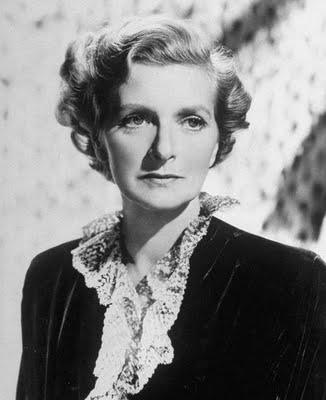


 Jerry Lewis used her as his


 She then, at age 74, got to fulfill a lifelong dream. She, as many actresses before her had done in a longstanding theatrical conceit, played Hamlet in a touring production!

 She had one final surprise in store and that was when she helped to launch the daytime soap opera Santa Barbara in 1984.
 Anderson really did live in Santa


