The 1955 film
Queen Bee, starring
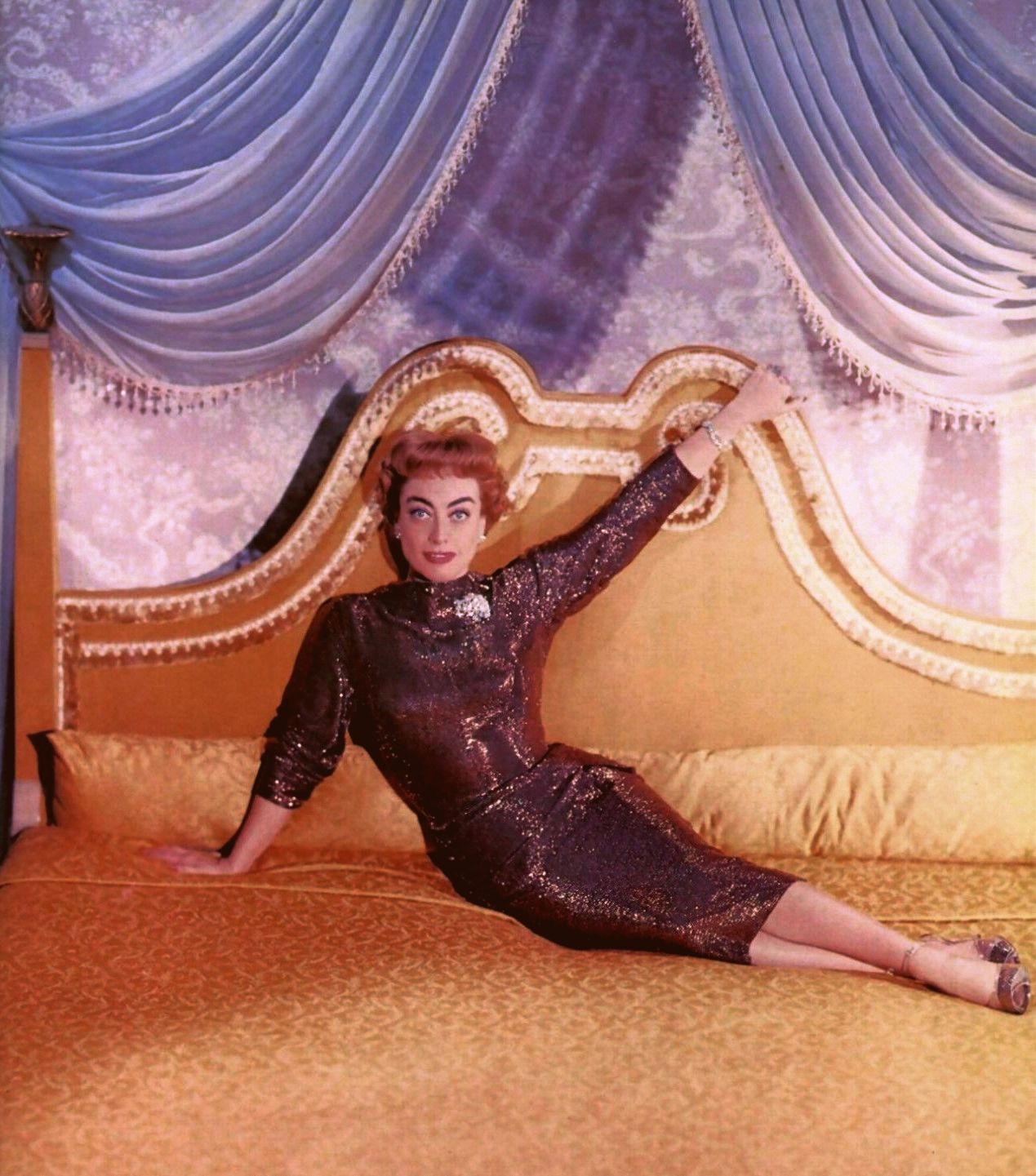
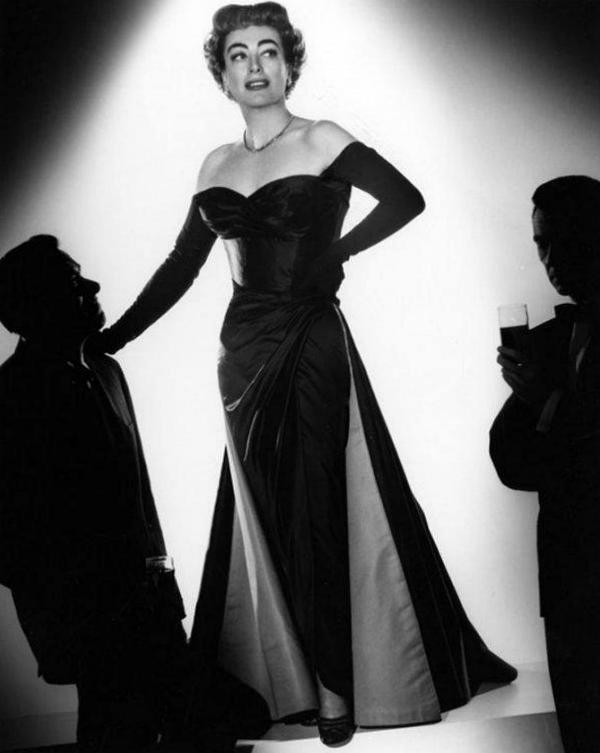
Miss Joan Crawford, is an exercise in control. The lead female character wants to control every detail of everything and everyone in her realm and, in real life, the woman playing the title role had substantial control of the project from the very start. In other words, this was a vanity production that, in more ways than one, came back to sting its megastar. She played an almost unmitigated shrew with the lines between fact and fiction becoming blurred (particularly by her adopted daughter Christina.) And years later, the makers of
Mommie Dearest (1981) borrowed heavily from this film when they set out to make not a movie about Joan Crawford, but more of a "Joan Crawford movie!"
Crawford, having climbed up from the chorus line to become a huge star at MGM only to languish there for a while, eventually landed at Warner Brothers where she enjoyed a career resurgence and copped an Oscar for
Mildred Pierce (1945.) Things percolated a while longer until
Sudden Fear (1952) gave her another career boost and another Oscar nomination. Thus, she was in a great position to angle for the production of this movie.
 |
| JC selects her character's jewelry. |
She bought the rights to the 1949 novel "The Queen Bee," then sold them to Columbia Pictures under the proviso that she star, that it be produced by Jerry Wald, that the script would be written by the same man (Ranald MacDougall) who did
Pierce and
Possessed (1947, which had scored her another Oscar nom) and that the movie would be shot by cinematographer Charles Lang, who'd done
Fear. She also exercised approval on all hair, makeup and costume decisions. So, she was indeed the big bee in charge of this hive. In fact, once it was revealed that writer MacDougall was interested in directing, it was he who was put in charge of helming the picture.
Crawford, who somehow ended up with so many hard-looking, not necessarily handsome, leading men in her mid-to-late career, was given two gentlemen to wrangle with here. They were both somewhere basically in-between Jack Palance of
Sudden Fear (1952) and her troglodyte pal from
Trog (1970), though it hardly mattered as all eyes and much of the light fell on her!
We begin our tale of woe at a big, stately Georgia mansion where a taxi is depositing a visitor.
This visitor turns out to be one Lucy Marlow, a young lady who's come to stay with her older cousin following the death of her mother, her only remaining immediate family member. To say that the house is more grand than what she is used to is an understatement.
Soon upon entering, she is met by two young children, her cousins. The young girl (Linda Bennett) takes an immediate liking to Marlow, though the little boy (Tim Hovey) bluntly states outright that he doesn't like her at all!
Considering the fact that, to me, Marlow doesn't look too far afield from the banjo-playing boy from
Deliverance (1972), it's a wonder that both children didn't go screaming into the bowels of the house, hiding until they knew she was gone forever!
Having trotted upstairs to be shown her room, she is on her way back down the mammoth staircase in time to witness an argument between a couple, Betsy Palmer and John Ireland. It's only one of many instances in which someone will see or overhear something they oughtn't to in the honeycomb-like abode.
She enters the drawing room and is confronted by this overbearing portrait of her cousin. (This painting, clearly based upon a younger version of our Joan, had the finishing details of the lips overseen and touched up by, you guessed it, Crawford herself!)
Gathered in the room are a young man, William Leslie and his elder sister along with the afore- mentioned Palmer and her own brother Barry Sullivan, the patriarch of the estate, though a rather inert one, thanks to a steady stream of booze.
Sullivan is referred to as "Beauty," though it's not really in reference to his general array of features, but an ironic nickname due to a craggy scar located on his face.
Do you recognize the lady playing Leslie's loopy sister? The character lives in a rose-colored version of the past, all magnolias and juleps, with an inability to truly grasp the present. You can be forgiven for not realizing that the actress playing this role is Miss Fay Wray, once the captive beauty of
King Kong (1933!) It seems even Kong wasn't enough to prepare Wray's character for the machinations of Crawford's, though.
Just when everyone seems to be getting along nicely, in wafts Crawford, fresh from a busy day of shopping! (She does, at least, bring home something nice for each of her two children and doesn't hog everything for just herself.) The tension builds immediately upon her entrance to the room.
She looks Leslie over hungrily and speaks to an obviously disturbed Wray without ever really looking at her! She also slurps down one of Sullivan's drinks in a lame attempt to prevent him from having more. Her assessment of the crowd continues with her looking over Palmer and complimenting her in spite of her "tacky riding clothes."
She finally lands on Marlow tucked away in the opposite corner and seems genuinely happy to have the girl there. (What she really wants is an ally, a drone to pay tribute to her; something her immediate family seems to have tired of doing!)
Marlow walks Leslie out to his car as he and Wray leave the premises. He seems taken with her already for reasons known only to the screen- writer.
Back inside, Marlow is informed that Wray is disturbed because on her wedding day, years ago, her groom dumped her for another woman. It's more than clear that Sullivan was the man and Crawford the other woman. Crawford and Sullivan proceed to a loud argument while a distraught Marlow takes comfort in Palmer's kind understanding.
A couple of days later (in a moment I have to admit really bothered me the first time I saw this film many years ago), Sullivan offers up a few snarky remarks to Marlow at the outdoor breakfast table before announcing that he's going to go and shoot the dog shown behind him (which Palmer explains is old and sick as it gleefully follows him into the brush with its tail wagging!)
Upstairs, Marlow gets a huge taste of what it's like to dote on her cousin. Crawford, in beauty gloves and a sleep mask, has very specific ideas about how she is to be graduated from deep sleep to mobility to morning coffee and beyond! This particular period found the star to be at her most, shall we say, garish, with the hair, eyebrows, eyelashes and lips all competing for attention...
As Marlow prepares Crawford's scorching hot bath, the phone rings. It's young gent Leslie who Crawford shamelessly flirts with. (It's pretty obvious that if she hasn't already been pollinated by this local stud, she's at least wanted to be!)
He's actually calling to ask if he can "beau" her niece Marlow and, surprisingly enough, this delights Crawford. As she considers passing the - ahem! - baton to her young relation, she fondles a phallic perfume bottle and eventually hands it off to Marlow, just like the gentleman caller she's speaking with.
Marlow is tentative, but Crawford insists that she needs to decide what she wants and must go out and take it! (It's basically a prelude to
Mommie's "You've got to know how to compete and win!" proclamation. It's almost unreal how much the makers of that movie allowed themselves to be swayed by this one.)
Marlow is given one of Crawford's old dresses to wear to a local dance and after receiving a corsage begins to sashay and flirtatiously pose in front of a mirror in the drawing room/ library. She's overlooked by Ireland, who informs her rather bluntly that her aunt does it better.
The two do call truce enough for him to pin her corsage on. Marlow heads over to the mirror to give it the once-over and Crawford enters the room, not realizing that Marlow is there. She begins to give Ireland the sultry, long-lost lover treatment until she realizes they aren't alone. (Then she chides Marlow for not making her presence known or joining in the conversation.)
Crawford is thrilled to see one-time lover Ireland, but dis- appointed that she has dinner plans on a night when he's going to stay over. While he sits and listens, she calls her hostess and begs off, all the while ensnaring her prey around the neck with the telephone cord! (Thanks to wireless phones, we no longer get to do fun things like this...)
Later, once Marlow is back from her date, she is awakened by the blood- curdling screams of little Hovey, who is plagued with nightmares about his mother and a car crash. (Sullivan's "beauty mark" is the result of a car crash.) Palmer calms him and gets him back to sleep, then explains some of the situation to Marlow.
Crawford is nowhere in sight during this event. She has bigger and better things on her mind! Sporting a nightie that gives her transparent wings in the moonlight, she buzzes downstairs to the library to seek out her mate.
Ireland, who truly loves Palmer, finds it hard to resist the nectar of Ms. Crawford as she flies into his arms and lays on her seductive charms.
Unfortunately, Marlow has begun to come downstairs herself after having been awakened by Hovey's nightmare and she spies the two during their indelicate encounter. Ireland pulls away from Crawford and declares that he can't go through with it, but it's too late for Marlow to see that.
Marlow takes Palmer's advice and looks up a book in the library all about bees; how the queen kills off all her competition and calls all the shots in the hive. Crawford can hardly believe that her young relative would bother with such a thing as she primps in the mirror endlessly.
Crawford is elated that a child psychologist she has called in has apparently determined that the cause of Hovey's nightmares is not anything to do with her, but rather the fact that the boy is too coddled by his aunt Palmer! (She's equally excited that the scrawny old coot seems to find her highly attractive!)
She sets out to move Palmer out of the bedroom she's been in since she was a small child. She begins by rifling through what appears to be her lingerie drawer (!) before roaming around the room complaining about Palmer and the way she's been treated by most everyone there.
She tosses Palmer's cherished dolls onto the floor and heaves a stuffed animal into the trash. Getting more and more worked up, she begins gripping a riding crop, twisting the handle in her hands as her anger accelerates.
Next, she takes the riding crop and sweeps all of Palmer's trophies for equestrian compe- titions onto the floor! She basically trashes the place and doesn't show the slightest remorse until she realizes how horrified Marlow is and how she has managed to let herself get out of hand.
Marlow tries to talk to the always-drunk Sullivan about the goings-on in his house, of which he seems to have little to no input or control, but their chat takes a turn in another direction, with him grasping her and planting a kiss! She doesn't exactly mind terribly, though she knows it isn't right.
Crawford's hackles are soon up again as she is informed that, despite her best efforts, Ireland and Palmer are going to be wed, and soon! She tries to pass it all off as rash on their part, but her real unhappiness over it is the fact that she wants Ireland for herself.
When Marlow is informed of the "happy" news, she beams about it to Crawford and is rewarded with a healthy smack across the face! (Slaps, courtesy of Joan, were a staple in many of her films and she even poked fun at that fact a time or two.)
Unable to bear the fact that Ireland will be wed to Palmer, Crawford continues to pour on all the honey she can to him, trying to make him drive her to the latest party (with one boob poking outward!) and basically causing upset for everyone around her whenever possible.
Later, Palmer is excitedly showing Marlow the blueprints of the house she and Ireland are making over and plan to live in. Until one of JC's "come fuck me" heels suddenly steps onto the paper with a sting.
Now having really had it, Crawford let's Palmer know that men are rotten, Ireland included. She not-so-subtly reveals that not only has he played the field, he's played in her field as well!
Palmer can hardly believe her ears, but - even though it isn't true recently - she does believe it and is crestfallen.
Unfortunately for Crawford, this most recent, desperate gambit doesn't turn out the way she'd expected it to and she's distraught once more. She takes to her bed for several days and hires a nurse to take care of her and to see to her son Hovey.
The nurse is deliciously severe and haughty, with threats of slapped hands to the little ones and snarky insinuations for Marlow about her feelings for Sullivan.
The whole place is a hive of angst and unhappiness and Ireland has just about had his fill of it all.
Sullivan, on the other hand, seems to be softening towards his wife. He's begun to let up on the drinking, has attended some of her parties and gifts her with a stunning bracelet she's had her eye on.
As we near the climax of the film, we're granted this stunning sight. The eye-popping staircase and chandelier provide a showcase for Crawford in one of her most showstopping Jean Louis get-ups of the film.
Before she descends the bottom stairs, she gives her wings a bit of a flutter and they follow her down the steps on either side.
Before leaving the house for her latest big night, she takes time to berate her once-loyal cousin Marlow for the way she's begun to feel for Sullivan and for generally being a disappointment. It's for naught anyway as Marlow has determined to leave.

I strive to avoid any significant spoilers in my movie tributes, so I will not go further with how this movie winds up. The whole thing is a deliciously fever-pitched camp gem, filled with biting dialogue, high melodrama and a surprisingly effective visual style, especially when seen in its proper widescreen ratio. (Hooty as it is now, it did garner two Oscar noms, one for its costumes,
which went to
I'll Cry Tomorrow, and one for cinematography, which went
to
The Rose Tattoo.)
As I say, Crawford unintentionally did herself a disservice by performing so nastily in this film as her eldest daughter later wrote that the person on-screen was the exact double of her mother and the closest she ever came to playing herself! And, as I've said and as you can probably see for yourself, the look of this film and of Miss Crawford was heavily copied for the (itself campy) film
Mommie Dearest.
The hairstyle she sports in
Queen Bee is one she helped to determine for the role and not one that she ever sported in public beyond a few publicity portraits. Her regular hairstyle, less severe and with less of a queenly bump to it, is seen here in a still from her birthday, taken when
Bee was in production.
 |
| The cake, and Al Steele, are pretty close, but not the hair. |
She was dating husband-to-be Alfred Steele at the time, but that didn't stop her from entering into a torrid sexual relationship with big man on campus Ireland. The two spent many a wild night, boozing and balling, during production! Later, when she did wed Steele (allegedly rather impromptu while they were both living it up), she cooled down both her paramours and her picture-making, only making two movies and a handful of New York TV appearances, before his sudden death in 1959.
Sullivan began acting as a young man in short films of the mid-1930s and on Broadway. His 6'3" stature was favored by leading ladies who liked looking up (thus erasing any double chins!) and he eventually graduated to supporting parts and then leads. He lent a sort of craggy authority to countless films and TV shows, including a leading seismologist in
Earthquake (1974.) He died of throat cancer in 1994 at age eighty-one.
Palmer was a stage actress who transitioned into television and movies in the early-1950s. 1955 was a banner year for her as she did not only this film, but also
The Long Gray Line and
Mister Roberts. This same year she joined the TV game show
I've Got a Secret, which ran until 1967 and was her biggest claim to fame for the longest time. That is until she made
Friday the 13th (1980) and was immortalized as Mrs. Voorhees, a role she took only for the $1,000/day paycheck (over ten days), but ultimately embraced to a degree.
 |
| Lobby card of a deleted scene from Queen Bee. |
Unlike some of Crawford's younger female costars, Palmer and she got along remarkably well and stayed friendly for years after. (Ann Blyth, Diane Baker and
Polly Bergen were others who made the grade on a personal level.) Palmer did 29 episodes of
Knots Landing and continued to act until 2007, passing away of natural causes in 2015 at age eighty-eight.
Ireland, who was married to Joanne Dru at the time of
Queen Bee, saw his marriage crumble in the wake of his real-life carrying on with Crawford. A movie actor from the mid-1940s on, he was Oscar nominated for
All the Kings Men (1949), but lost to Dean Jagger for
Twelve O'Clock High. He'd made a strong impression the prior year in
Red River alongside John Wayne and Montgomery Clift. Always busy, he acted until about 1992, the year he died of leukemia at at seventy-eight.
Marlow, who truly plays a frump here, was shown to better advantage when a little more gloss was applied to her face and figure. Having just begun the year before this, she also appeared in
My Sister Eileen in 1955. In 1956, she costarred with Frankie Laine in
He Laughed Last, but thereafter only worked sporadically on television as she raised two children with a husband she wed the same year as
Queen Bee.
Still with us today at eighty-six, it would have been wonderful (or terrible!) to hear of her time working opposite la Crawford on a commentary track or in an interview. According to Palmer, Crawford was initially pleased with Marlow, but cooled after she determined that the "talent wasn't there" that she thought had been. Ann Helm was another actress who found out the hard way that you had to stay on your toes with Joan.
She was fired from Strait-Jacket (1964) and replaced with Diane Baker.
Leslie, who is barely given a chance to show his face full-on here, had been performing in bit parts since the early-1950s and continued to various supporting roles, never quite able to break through and play leads (one exception being 1957's
The Day the World Exploded, opposite Kathryn Grant.) By the time of 1965's low-budget
Mutiny in Outer Space, which he also headlined, the writing was on the wall and he was finished acting within two years. He died in 2005 at age eighty.
Wray was a really wonderful lady, liked by practically all the people she worked with (including Crawford, who sent her an encouraging and welcoming note upon the death of her husband and her acceptance of this small part soon after. The two had been WAMPAS Baby Stars, a promotional program for burgeoning actresses, together in 1926.) Having appeared in over eighty movies and plenty of TV, she was nonetheless best known as the object of affection for
King Kong in that legendary 1933 adventure. Her autobiography was cleverly titled "On the Other Hand." She lived to be ninety-six, passing away in 2004.
This was a key time for child actor Hovey. The same year as
Queen Bee he had a costarring role in
The Private War of Major Benson opposite
Charlton Heston. In 1956, he costarred in
The Toy Tiger with Jeff Chandler and
Everything But the Truth with
Maureen O'Hara. He did a few more films and some TV, but was out of the business by 1959. (He was offered a role in Broadway's Critic's Choice in 1960, but turned it down. Eddie Hodges took the part.) Like many child actors, growing up cost him both his childhood and his performing career and he eventually turned to work behind the scenes of the music biz, but died of a self-induced drug overdose in 1989 at age forty-four.
 |
| "Art" imitating "art," rather than life... |
For sheer camp entertainment value, it's tough to beat the sometimes outrageous
Queen Bee. It features the fire-breathing Joan Crawford at practically her most vicious. Even she thought her character was an unpardonable bitch. As I've noted, though, her legacy was what wound up being stung the most by it when the character in the film was copied in several ways for her quasi-biopic!
 |
| Staircases like the one in Queen Bee made their way into Mommie Dearest (as well as Feud), though Crawford's Brentwood home featured nothing of the kind. Just a plain, straight stairwell done in Spanish tiles... |